Super Bowl Sunday: The Social Psych Perspective

Screen Shot 2015-02-01 at 2.45.36 PM

Image from AZSuperbowl

About a third to a half of America’s population tunes in to the Super Bowl every year. That may not seem surprising, but the wildly popular American Idol only pulled in about 30 million viewers in its best years. A huge amount to be sure, but it pales in comparison to the Super Bowl’s 110 million (give or take).* Social psychologists may not be surprised about the popularity of the Super Bowl, given our tendency to invest ourselves deeply in sports.

In a famous study at Ohio State University, Robert Cialdini and colleagues found that students wore OSU clothing more following a win than after a loss.1 They also noticed that people were more likely to use “we” language (i.e. “we won”) when the team performed well, and were more likely to use “they” language when the team performed poorly (i.e. “they lost”).1 This phenomenon is often referred to as Basking in Reflected Glory (BIRGing) and Cutting Off Reflected Failure (CORFing).2 However, there is some evidence that die-hard fans may not engage in CORFing, suggesting they have more dedication to the team.3

So enjoy those wings, call some couch plays and no matter the outcome (***cough, cough*** Patriots win ***cough, cough***), don’t be a fair-weather fan!

*EDIT-on a good year! These stats do include worldview viewership, but worldwide viewership is notoriously low

  1. Cialdini, R. B., Borden, R. J., Thorne, R. J., Walker, M. R., Freeman, S., & Sloan, L. R. (1976). Basking in reflected glory: Three (football) field studies. Journal of Personality and Social Psychology. 34, 366-375.
  1. Cialdini, R. B., & De Nicholas, M. E. (1989). Self-presentation by association. Journal of Personality and Social Psychology. 57, 626-631.
  1. Sloan, L. R. (1979). “The function and impact of sports for fans: A review of theory and contemporary research.” Pp.219-262 in J. H. Goldstein (00.), Sports, games, and play: Social and psychological viewpoints. Hillsdale, NJ: Erlbaum.

Self-Control and Eating: Which counts more, health or taste?

Could the time it takes you to process taste- and health-related characteristics of food predict the final food decision you’ll make? A study recently published in the journal Psychological Science1 would suggest so. The study examined the hypothetical food decisions of 28 male and female undergraduates using a mouse tracking task, which captured both the time and trajectory of participants’ decisions. See image below of the task and sample trajectory results.

FoodChoice_Mouse track

food choice_caption Participants low in dietary self-control processed tastiness of a food significantly faster than healthiness of a food before making a final food decision. The researchers suggest that the earlier a factor like taste is processed while making a decision, the more heavily weighted that factor will be in someone’s final decision. Health-related attributes (e.g. calories), on the other hand, are delayed in the decision-making process and won’t be as strongly considered in the decision-making process. For example, someone low in dietary self-control who has a weak spot for gooey fudge brownies will immediately think about how delicious and sweet the brownies will be rather than their relative unhealthiness, and this deliciousness factor will be the strongest and loudest factor when that person decides whether to eat the brownies. Knowing this, no one is surprised when the brownies win the majority of the time.

In contrast, participants high in self-control processed tastiness and healthiness at approximately the same time, making both attributes relatively balanced when making a food decision, which may explain why those high in dietary self-control are more often successful when trying to exert self-control in a food situation.

Based on these findings, the researchers suggest the following implications:

  1. Delaying a food decision, even by a small waiting period, may be enough time to allow health factors to influence a final decision more strongly
  2. Interventions that can increase speed with which health information is processed may improve dietary self-control.
  3. Marketing strategies that display health attributes more prominently may promote faster processing of health attributes

To read the original article, check out the citation below.


1- Sullivan, N., Hutcherson, C., Harris, A., & Rangel, A. (2014). Dietary self-control is related to the speed with which attributes of healthfulness and tastiness are processed. Psychological Science. Advance online publication. 1-13. doi: 10.1177/0956797614559543

Are you a good decision-maker?

To find out, take this 5-question quiz featuring favorite questions from faculty members part of Duke University’s D-CIDES (the Duke Center for the Interdisciplinary Decision Sciences).

Any surprises? Share in the comments!

Justifying indulgence on Thanksgiving

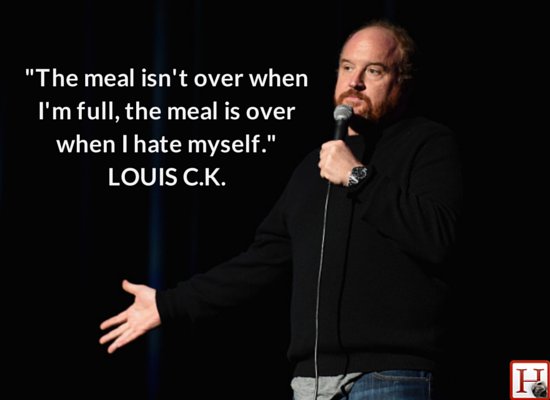
Louis CK’s take on Thanksgiving

Tomorrow is Thanksgiving! That time of year when you feel that your indulgence is somewhat justified and the guilt for everything you ate is mitigated by the tradition of the holiday. If I just described you, don’t be alarmed. You are certainly not alone. Thanksgiving is a prime day for rationalizing indulgences for people who may otherwise feel guilty about blowing their diet. Recent research finds that people typically rely on six different explanations to justify eating (a lot of) unhealthy foods1, all of which are relevant to Thanksgiving dinner:

  1. Availability of unhealthy food: Unhealthy foods abound and are difficult to avoid. Those green beans just pale in comparison to the mashed potatoes.
  2. Intentions to compensate for the unhealthy eating in the near future: You make firm plans to exercise regularly for the next week and to limit your consumption of leftovers.
  3. Indulgence as an exception to the norm: Thanksgiving is just one day a year, after all. You never eat pumpkin pie or dessert, for that matter. And when was the last time you had your uncle’s stuffing?
  4. Feeling deserving of the unhealthy food: Related to all of the above and then some. You have been eating healthy foods consistently lately, and you just got a promotion at work. Plus, having to interact with some of your extended family makes you feel deserving of any prize.
  5. Curiosity-compelled indulgence: I don’t know exactly what this cookie is, but it looks and smells delicious. I have to try it!
  6. Irresistibility of the foods: Who can turn down sweet potato casserole? Everything smells fantastic!

Honestly, indulging occasionally shouldn’t have to be guilt-inducing. Thanksgiving is a special occasion involving atypical foods and eating companions who may live far away. The act of eating is social and pleasurable and should be enjoyed. However, if you’re someone who finds that the holidays are a more permanent setback for your health goal, you are not doomed. Strategies exist for maintaining your health goals and still enjoying (yes!) your Thanksgiving meal. Check out this Slate article for some tips by Brian Wansink, an expert food researcher, on how to manage your eating.

Did the researchers miss any justifications? What have you noticed at previous Thanksgiving meals?

Happy Thanksgiving, everyone!


1 Taylor, Webb, & Sheeran. (2013). ‘I deserve a treat!’: Justifications for indulgence undermine the translation of intentions into action. British Journal of Social Psychology.

Psych in Sum: The Google Effect

Screen Shot 2014-11-20 at 11.06.08 PM

               Image from Google.com

Do you ever wonder what the internet is doing to our brains? You’re not alone!

In 2011, Betsy Sparrow, Jenny Liu and Dan Wegner published an article about the “Google effect,” a phenomena where people neglect to commit information to memory when they know they can easily find it later. Across 4 studies, Sparrow et al found that participants were more likely to remember where they could find information (i.e. the file location on a computer), than the information itself (2011). So the next time you find yourself looking up the address to your favorite bar to tell your Uber driver for the umpteenth time, commit it to memory and best the Google effect!

Sparrow, B., Liu, J., & Wegner, D. M. (2011). Google effects on memory: Cognitive consequences of having information at our fingertips. Science, 333(6043), 776-778.

Is academia in a post-sexist era?

Two senior faculty members at Cornell, Stephen J. Ceci and Wendy M. Williams, seem to think so. They wrote an entire paper and a recent op-ed in the New York Times on the topic. In the week since, the blogosphere and social media have done their part to destroy point out the inconsistencies and contradictions the authors make, calling them on their biased conclusions. I won’t personally add to these observations but, instead, point you to some of the more compelling and insightful critiques of the laughable notion that academia* is no longer sexist:

1. Emily Willingham’s post: Academic science is sexist: We do have a problem here

2. Rebecca Schuman’s article in Slate: Don’t worry your pretty little heads

3. Red Ink’s: Let me fix that for you, New York Times


What do y’all think?


* Academia, as a whole. Certain subjects and fields may have different experiences, although I doubt they vary greatly from the overall norm.

Bias Blind Spot

Screen Shot 2014-10-05 at 6.05.11 PM

Image from Digital Journal

Ah, it’s that time of year again. Pumpkin spice everything, apple cider, political elections… And of course, with elections come those discussions we all know and love about how _______ party is full of it and _______ party has all the answers. Having a conversation with someone with different beliefs than you is often an exercise in futility, with one of you insisting that the other one doesn’t know jack. One of the reasons that we may engage with others this way is bias blind-spot. Bias blind spot is the tendency to easily recognize bias in others, but an inability to recognize it in ourselves. In a group of studies, participants rated themselves as less susceptible to biases than other people, were more likely to consider their assessments of themselves as objective even after being told they could be biased, and were more likely to say that other people’s attributions about performance on a test were biased, but that their own attributions were not (1). So next time you pull onto condescension highway, check your bias blind spot first.

1. Pronin, E., Lin, D.Y., & Ross, L. (2002). The bias blind spot: Perceptions of bias in self versus others. Personality and Social Psychology Bulletin, 28(3), 369-381.

Psych in Sum

Screen Shot 2014-09-14 at 7.28.41 PM

Image from IKEA catalog

Ever spent a few frustrating hours trying to put together a large piece of furniture from IKEA? Or perhaps you’ve put in some hours refinishing a piece of furniture, or pinteresting your way to a chair made out of a whiskey barrel. Well, research shows that you may become especially attached to things that you build (1). Results in this study showed that participants were likely to bid more money for things they built, and felt that their skill was comparable to experts. Basically, you DID that bookcase, and you know it.

(1) Norton, M. I., Mochon, D., & Ariely, D. (2012). The IKEA effect: When labor leads to love.” Journal of Consumer Psychology, 22 (3), 453–460.