The Real Threat of Ebola

The largest Ebola outbreak in history is happening right now in Africa, with the first confirmed case diagnosed in the US just this past week. Admittedly, reports of Thomas Eric Duncan’s health are not good, with his status being upgraded to critical yesterday. But we also know that he is not getting the experimental drug that the patients brought back from Africa all received (Kent Brantly, Nancy Writebol, Richard Sacra, and an unidentified doctor).** And we know that his family and those closest to him are being monitored by the Center for Disease Control, as well as over 100 people suspected of coming into contact with Duncan.

Screen Shot 2014-10-03 at 6.48.27 PM

Image from Vox.com

This infographic making its own viral path through the interwebs pretty much sums up what we know about getting this disease: Ebola is not an airborne virus, and must be contracted by coming into contact with an infected person’s bodily fluids. This article provides a great overview of how an Ebola infection can occur (spoiler alert: the big 3 risk factors are caring for a patient at home, treating a sick person without using protective wear or preparing victims for funerals). Overall, the death toll of the current outbreak hovers around 50%. So what does this tell us about the spread of and vulnerability to this virus? Essentially that it is HIGHLY unlikely that you will contract Ebola here in the US, and you probably should not be traveling to West Africa any time soon. In addition, my mom would tell you to wash your hands and carry hand-sanitizer (she’s right). But psychologically, it’s a bit more complex.

Over 100 Americans died of the flu during the 2013-2014 flu season, over 580,000 people died of cancer in 2013 and over 52,000 people died of pneumonia in 2011. So far, there has been 1 diagnosis of Ebola in the US, and 0 deaths, yet many people are absolutely terrified that they will catch Ebola at an airport or other public space. Overestimating the likelihood of the occurrence of an event based on the amount of available examples is something called the availability heuristic (1,2). One reason that we are more concerned about dying from Ebola than dying from the flu is because we can think of a lot of available examples of people who have died from Ebola, and we can think of no or very few examples of people dying from the Flu. Yet, we know it is far more common in the US.

Now that we know how unlikely it is that we will get Ebola (phew!), and we know why people are reacting so viscerally to the management of Ebola in the US, let’s turn to a potentially huge problem of this outbreak: Disease threat and it’s associated behaviors. Disease threat is managed interpersonally by something evolutionary psych researchers call the Behavioral Immune System (BIS). The BIS works by subconsciously preventing you from exposing yourself to disease threats, stopping illness before it happens (3). One of the ways this happens is through the disgust response (4). Bodily fluids tend to be fairly gross, causing a visceral reaction and encouraging people to get as far away from them as possible. This response is generally a good thing in terms of limiting sources of contagion, but it can also work through ethnocentrism (5). There is evidence that when people are feeling threatened by disease, they are more likely to show preference for their own groups, they are more likely to exhibit conformity and they exclude outgroups (6).   Unfortunately, this effect also tends to isolate people with physical disabilities or disfigurements, who are somehow seen as possible contagion sources even though the vast majority of disabilities are not the result of contagious disease (7, 8).

The risk of being exposed to increased prejudice and brusqueness from our fellow Americans is a far greater threat to all of us than the Ebola virus. In addition to it being incredibly unlikely that there will be an outbreak in the US, the probability that a person you are interacting with has come into contact with Ebola is practically nonexistent. So be vigilant with your hand-sanitizer, not with the strangers you meet.

* Thanks to Dr. Mark Leary for the idea for this article!  Check out his work about self-presentation and self-compassion here.

**October 6th news reports that Duncan has received an experimental drug, though not the same as Brantly and Writebol.  Sacra apparently got a different drug as well.

  1. Tversky, A., & Kahneman, D. (1973). Availability: A heuristic for judging frequency and probability. Cognitive Psychology, 5, 207-232.
  1. Tversky, A., & Kahneman, D. (1974). Judgment under uncertainty: Heuristics and biases. Science, 185, 1124-1131.
  1. Schaller, M., & Park, J.H. (2011). The behavioral immune system (and why it matters). Current Directions in Psychological Science, 20(2), 99-103.
  1. Oaten, M., Stevenson, R.J., & Case, T.I. (2009). Disgust as a disease-avoidance mechanism. Psychological Bulletin, 135(2), 303-321.
  1. Navarrete, C.D., & Fessler, D.M.T. (2006). Disease avoidance and ethnocentrism: The effects of disease vulnerability and disgust sensitivity on intergroup attitudes. Evolution and Human Behavior, 27, 270-282.
  1. Murray, D.R., & Schaller, M. (2012). Threat(s) and conformity deconstructed: Perceived threat of infectious disease and its implications for conformist attitudes and behavior. European Journal of social Psychology, 42, 180-188.
  1. Ackerman, J.M., Becker, D.V., Mortensen, C.R., Sasaki, T., Neuberg, S.L., & Kenrick, D.T. (2009). A pox on the mind: Disjunction of attention and memory in the processing of physical disfigurement. Journal of Experimental Social Psychology, 45(3), 478-485.
  1. Park, J.H., Faulkner, J., & Schaller, M. (2003). Evolved disease-avoidance processes and contemporary anti-social behavior: Prejudicial attitudes and avoidance of people with physical disabilities. Journal of Nonverbal Behavior, 27, 65–87.


Unpacking Ello

Ello's minimalist design

Ello’s minimalist design (Screenshot of Mallory’s first sign-in to Ello)

Yesterday, I saw a status on Facebook about a new invite-only “anti-facebook” social network: Ello. FOMO ensued. What was this minimalist social network? Why had I never heard of it? What was I missing?! I had to know, so I asked the friend for an invite to see what the fuss was about. I signed up and…it’s definitely minimal. Having launched beta-testing this past July, Ello is meant to be ad-free. Which equals no ads, or the fancy interfaces they pay for. But also, no signing onto this social network wondering how they know you’ve been waiting for those sweet high-top Missoni Chuck Taylor’s to go on sale (story of my life). So why has Ello blown up recently? Yesterday, CNET reported that they have 35,000 sign-ups an hour. The social psychologist in me wonders what’s making Ello the new up-and-coming social network, and why. Here are some hypotheses:

  1. There’s an increasing desire for a social network that isn’t manipulative.

We all know what those ads pay for (i.e. cool features and sleek design), and what they cost (i.e. your data and your privacy). With the recent uproar over the Facebook mood contagion experiment, social media users are calling for the ability to network without any “secret algorithms” or tracking cookies following them all over the web. A study by Debatin et al found that users who experienced privacy violations were more likely to change their privacy settings than were users who only heard about privacy violations (1). Almost 700,000 Facebook users timelines were manipulated, which left many users wondering if they were in the sample and feeling distrustful.

  1. People love exclusivity.

The $10,000+ Hermes Birkin Bag is infamous for its waitlist, people were still waiting in line for over two weeks to be among the first to own the new iPhone 6 (now in its 5th generation), and elite New Yorkers duke it out for months over a small number of pre-school spots for their kids, costing as much as a year of college tuition. All of these examples share a common element: Scarcity, a well-known persuasion tactic. A classic study by Worchel et al found that participants valued cookies more highly when they were in a near-empty or rapidly-emptying jar, than when they were in a full or rapidly-filling jar (3). Indeed, scarcity is so powerful it is one of Cialdini’s 6 principles of persuasion.

  1. Brand authenticity is especially hot right now.

Craft breweries are raking in the big bucks, with some marketers suggesting that it’s due to their masterful upstart narratives. Unlike Bud Lite, when you crack open a 21st Amendment Fireside Chat, you know where the beer was made and you feel like you’re supporting some bearded young man with a fermentation tank and a dream. Creating this kind of subculture may be one way brands achieve authenticity. Research by Leigh et al found that MG car owners derived a sense of authenticity from belonging to the MG subculture (2). Participating in a subversive subculture like Ello may have the added allure of the perceived authenticity of the community in light of anti-establish statements, like their manifesto.

The verdict is still out on whether or not Ello will succeed, but there may be strong social forces at work in its burgeoning popularity.

  1. Debatin, B., Lovejoy, J.P., Horn, A.K., & Hughes, B.N. (2009). Facebook and online privacy: Attitudes, behaviors, and unintended consequences. Journal of Computer-Mediated Communication, 12(1), 83-108.
  1. Leigh, T.W., Peters, C., & Shelton, J. (2006). The consumer quest for authenticity: The multiplicity of meanings within the MG subculture of consumption. Journal of the Academy of Marketing Science, 34(4), 481-493.
  1. Worchel, S., Lee, J., Adewole, A. (1975). Effects of supply and demand on rating of object value. Journal of Personality and Social Psychology, 32(5), 906-914.

Psych in Sum

Screen Shot 2014-09-14 at 7.28.41 PM

Image from IKEA catalog

Ever spent a few frustrating hours trying to put together a large piece of furniture from IKEA? Or perhaps you’ve put in some hours refinishing a piece of furniture, or pinteresting your way to a chair made out of a whiskey barrel. Well, research shows that you may become especially attached to things that you build (1). Results in this study showed that participants were likely to bid more money for things they built, and felt that their skill was comparable to experts. Basically, you DID that bookcase, and you know it.

(1) Norton, M. I., Mochon, D., & Ariely, D. (2012). The IKEA effect: When labor leads to love.” Journal of Consumer Psychology, 22 (3), 453–460.

Psych at Work

Brandon Stanton (fellow Bulldog!) harnessed the power of social media to become a popular street photographer with his facebook page Humans of New York. Stanton uses his unique skill for combining photography and storytelling to bring people together all over the world. With its humbling subjects and profound wisdom, Humans of New York attracts mostly positive comments (a feat in the digital age). One reason that people may enjoy the page so much is the fact that they are exposed to people of different races, nationalities, and backgrounds in a way that’s accesible. This seems to make interactions with outgroup members on the page more positive, and thereby increasing liking of those outgroups, and decreasing negative interactions. Otherwise known as the contact hypothesis!

Screen Shot 2014-09-14 at 7.32.17 PM

Image from Spav Corridor

It’s a Psych, Sad World: Ray Rice Elevator Video

Screen Shot 2014-09-14 at 7.23.19 PM

Still image captured from TMZ video footage.

Early last week, a video was released of NFL player Ray Rice knocking his wife out in an elevator, moments before he dragged her unconscious body across a hotel lobby. Many people are quick to point out that Janay Rice doesn’t consider herself a victim, and that she married him after the incident occurred. Still more say she would have left him if he was really abusive. But research shows that people in abusive relationships stay for complex reasons. Rusbult and Martz demonstrated that women who were more invested in their relationships were more likely to return to their abusive partner (1). Dutton and Painter showed evidence for traumatic bonding theory: the idea that intermittent abuse creates extremely strong attachments (2). And Strube and Barbour demonstrated that both commitment level and economic dependence are related to decisions to stay or leave (3). With overwhelming scientific evidence, we know that combining love and violence is rarely black and white.


(1) Rusbult, C.E., & Martz, J.M. (1995). Remaining in an abusive relationship: An investment model analysis of nonvoluntary dependence. Personal and Social Psychology Bulletin, 21(6), 558-571.

(2) Dutton, D.G., & Painter, S. (1993). Emotional attachments in abusive relationships: A test of traumatic bonding theory. Violence and Victims, 8(2), 105-120.

(3) Strube, M.J., & Barbour, L.S. (1983). The decision to leave an abusive relationship: Economic dependence and psychological commitment. Journal of Marriage and Family, 45(4), 785-793.


Working against justice in our “Just World”

“If this is the best of all possible worlds, what are the others?”- Voltaire, Candide

Screen Shot 2014-09-14 at 7.11.58 PM

Image from dayandadream.com

Back in 1759, Voltaire wrote a rich satire of 18th century society, unleashing his sharp wit on issues from religion to philosophy. One of the many lasting criticisms brought to light in this classic work is that of the just world phenomenon: the belief in some cosmic fairness, and thus, that people tend to get “what they deserve.” The just world phenomenon manifests itself all the time.

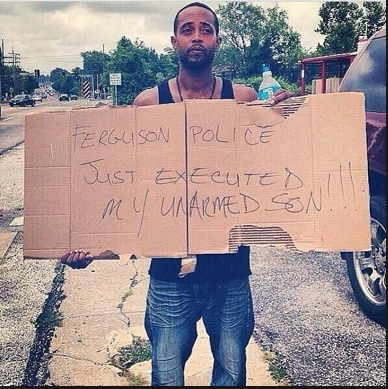
People often equate the need for public assistance to laziness. When talking to coworkers about their skills, we often reassure them that if they work hard, they will get the recognition they deserve. And when unarmed black teens are killed on the street, people often assert that they probably “had it coming.” Voltaire had great insight into our violent and optimistic nature: we are unlikely to see undesirable events as random because it’s scary, and it’s a slippery slope from optimism to ignorance

Case-in-point, system justification theory predicts that people are motivated to hang on to the status quo, and will often defend the current system regardless of its disadvantages. Some researchers have attributed this effect to a desire to defend one’s self-concept or group identity against threat (2,3). But there’s also evidence that people do this when they are the very ones at a disadvantage (1).

For instance, in the days following Mike Brown’s August 9th shooting, I saw my first “Pull Your Pants Up Challenge.” This video by Malik S. King is a great example of system justification at work. I doubt the men participating in this challenge actually believe that shooting someone because of the location of his pants is justifiable, but the assertion that black people can dress differently to avoid negative consequences smacks of the old revealing clothing rape justification argument. These videos demonstrate how powerful and how pervasive system justification is.

So, why are people defending the system? Perhaps it is because it is too threatening to think that we have law enforcement officers on the streets who do not make lethal force decisions objectively. Perhaps the young black men doing the pants challenge want to believe that they have some control over whether or not the police will shoot them. But sometimes we must face the reality that not all actions make sense. We do not live in the best of all possible worlds.

One of the main aims of experimental social psychology is to study phenomena that apply to real life. That application is sometimes applied, but often it is simply educating individuals about their own behavior and motivation. I believe the just world phenomenon and system justification theory speak to the latter mission. By knowing that we are cognitively motivated to believe that the world is just, and that we often advocate for existing systems despite fatal flaws, we can be critics of our own cognition, and work toward bringing more justice into our just world.

(1) Toorn, J., Feinberg, M., Jost, J. T., Kay, A. C., Tyler, T. R., Willer, R., & Wilmuth, C. (2014). A sense of powerlessness fosters system justification: Implications for the legitimation of authority, hierarchy, and government. Political Psychology, doi:10.1111/pops.12183

(2) Sherman, D. K., & Cohen, G. L. (2006). The psychology of self-defense: Self-affirmation theory. Advances in experimental social psychology, 38, 183-242.

(3) Spears, R., Jetten, J., & Doosje, B. (2001). The (il)legitimacy of ingroup bias: From social reality to social resistance. In J. T. Jost & B. Major (Eds.), The psychology of legitimacy: Emerging perspectives on ideology, justice, and intergroup relations (pp. 332-362). New York: Cambridge University Press.