10 Days of Christmas…Consumerism: Day 4

SEM

Structural equation model from Dholakia, Bagozzi, & Pearo, 2003

In the digital age, when so much holiday shopping occurs online, how are consumers socially influenced? The answer is: surprisingly a lot. The average adult in the US spends 5 of their waking hours online. But what are we doing online? We’re on social media, we’re reading and commenting on news articles and discussing that internet content with others. Consider the last time you were with a friend and you brought up an article you saw online, or a post from Instagram. This is part of the way that content goes viral, this word of mouth advertising from trusted others. Word of mouth moves even faster on the internet, with websites like Yelp and Amazon at our fingertips, reviewing products and services from plumbers to stereos.

Social influence is the highest in virtual contexts when people are engaged in relationships, in real life or within a brand community. This is because we’re most influenced by our ingroup members (people we consider part of our social circle, or group within society, e.g. all people of one race, all people of one social class or all alumni of the same college).1 When we’re engaged in virtual brand communities, we form social bonds with that group, creating an ingroup of people and increasing identification with the brand.2 Brand communities can also invoke peer pressure, like pressure to conform in some undesired group discussion, and establish community norms, created and maintained by the moderators and high profile members of the those communities.2 Check out the graphic for a depiction of the incredibly complex process of creating web content through social influence.

Brands themselves have social influence, especially if they are “identity signaling brands.” An identity signaling brand is something that announces you to the world and says, “This reflects who I am as a person.” Not surprisingly, while people tend to stick with the status quo and purchase the same things as others, in identity signaling domains that include displays of wealth or social class, they want to be seen as unique.3 But we all also vary on our need for uniqueness, with some individuals needing to stand out from others, and some preferring to fit in through their choices as consumers.4 For instance, when shopping for a car, someone with a high need for uniqueness may buy a Smart Car (rare here in America), while someone with a low need for uniqueness may buy a Honda (quite common in America). Someone who sees his or her car as an identity signal may be more likely to want to purchase an expensive and rare car, like a Bugatti, to show others that they are different.

It is the job of marketers to be persuasive, and to increase demand for products within the community. And, meanwhile, it is human nature to be influenced by the words and actions of others, as well as our own desires to fit in or stand out. Beware before you engage in social activities based around brands this holiday season! Harnessing the power of peers and the power of consumer goods is a potent combination.

  1. Cialdini, R. B., & Goldstein, N. J. (2004). Social influence: Compliance and conformity. Annual Review of Psychology, 55, 591-621.
  2. Algesheimer, R., Dholakia, U. M., & Herrmann, A. (2005). The social influence of brand community: evidence from European car clubs. Journal of Marketing, 69(3), 19-34.
  3. Berger, J., & Heath, C. (2007). Where consumers diverge from others: Identity signaling and product domains. Journal of Consumer Research, 34(2), 121-134.
  4. Tian, K. T., Bearden, W. O., & Hunter, G. L. (2001). Consumers’ need for uniqueness: Scale development and validation. Journal of Consumer Research, 28(1), 50-66.

10 Days of Christmas…Consumerism: Day 3

Screen Shot 2014-12-18 at 11.22.08 AM

Image from Phys.org

Yesterday, we discussed how contagion may play out in the marketplace, and how other people may affect our brand evaluations. But social influence is ever-present in our lives as consumers, affecting our impressions and our behavior in many ways. Consider how you hear about new bands, or hot clothing trends. Often, we become exposed to these things through our environment. Specifically, through the influence of what marketers call early adopters.

Early adopters are people who are “ahead of the curve” on new trends, and they’re the people you know who always have the new technology, who always have the new clothes and generally know about trends before others. Once those early adopters begin influencing their community, the trend increases exponentially in popularity, through word of mouth and the visibility of the trend. The diffusion of the trend is even faster in close, heterogeneous groups like schools or small towns.1 But, make no mistake, early adopters are just as influenced by us as we are by them. Researchers have found that early adopters enjoy consumption visibility, or, the fact that other people recognize them as early adopters because of their purchasing choices.2 They have a cooler phone than you, and they want you to know it.

Social influence can also alter our brand choices, even when the influence is coming from a total stranger. A study by Maryland and Duke researchers uncovered evidence that incidental consumer brand encounters significantly influence product choices.3 Participants were shown 20 photographs of people engaged in mundane activities, like waiting for the bus.3 Within those photographs, participants either saw 0, 4 or 12 pictures that included a bottle of Dasani water near the person.3 They then asked participants to choose 1 of 4 brands of bottled water, with Dasani among the brands.3 Controlling for participants who explicitly noticed the Dasani water in the pictures, participants who viewed 12 pictures with Dasani brand images were more than 25% more likely to choose Dasani bottled water than those who saw none or only 4.3 While this may seem obvious, this is the reason advertisers flood you with repeated brand messages in hopes of altering your purchasing intentions. Fight the repetitive power!

So, you heard it here first folks, go out and be the anonymous consumer influences you were born to be!

  1. Delre, S. A., Jager, W., & Janssen, M. A. (2007). Diffusion dynamics in small-world networks with heterogeneous consumers. Computational and Mathematical Organization Theory, 13(2), 185-202.
  2. Fisher, R. J., & Price, L. L. (1992). An investigation into the social context of early adoption behavior. Journal of Consumer Research, 477-486.
  3. Ferraro, R., Bettman, J. R., & Chartrand, T. L. (2009). The power of strangers: The effect of incidental consumer brand encounters on brand choice. Journal of Consumer Research, 35(5), 729-741.

10 Days of Christmas…Consumerism: Day 2

Screen Shot 2014-12-16 at 6.17.21 PM

Image from New York Times

Yesterday, we discussed how product contagion works. But other people can also change our impressions about products. These people can be celebrities used to promote a product by associating themselves with it, or they can be other consumers in the marketplace or salespeople you encounter. As always, our impressions as consumers are shaped by those around us.

In a particularly interesting line of research, experimenters found that people are far less likely to purchase products that other people have touched.1 In their study, participants were asked to find a salesperson in the university bookstore and purchase a particular shirt.1 The salesperson was a confederate (another experimenter posing as a civilian) who told participants one of 3 things: Another customer was currently trying on the only shirt, that the shirt was on the return rack outside of the dressing room or that the shirt was on a display in the store like all of the other merchandise.1 Results indicated that people who knew another person had just tried on the shirt were the least likely to buy the shirt, had the least positive evaluations of the shirt and had significantly higher feelings of disgust for the shirt.1 People who saw the shirt on the rack had more positive evaluations and were more likely to purchase the shirt.1 As with product contagion, the other person “rubbed off” on the product itself, altering participants’ evaluations. This same group of researchers found a caveat to this finding: people have slightly higher product evaluations if the person who touched the product was attractive.2

Other people can also affect shopping experiences through what one researcher dubbed “accidental interpersonal touching” incidents.3 This researcher found that shoppers who were accidentally touched by another customer while they were looking at a product had significantly more negative brand evaluations than participants who were not touched while evaluating the same product.3 The holiday season is certainly famous for this, so let’s all do the economy a favor and keep our hands and bodies to ourselves.

We can also “catch” positive moods from others, which increases positive product attitudes.4 This may be why people are swayed to buy clothing items when salespeople or other customers tell them how wonderful they look in it. However, the person you’re interacting with has to be liked, or the effect can actually backfire and decrease product evaluations.4

The mall is a veritable field experiment in consumer psychology, so stay on your toes and do the beleaguered sales associates and your fellow consumers a favor and stop touching everything.

  1. Argo, J. J., Dahl, D. W., & Morales, A. C. (2006). Consumer contamination: How consumers react to products touched by others. Journal of Marketing, 70(2), 81-94.
  2. Argo, J. J., Dahl, D. W., & Morales, A. C. (2008). Positive consumer contagion: responses to attractive others in a retail context. Journal of Marketing Research, 45(6), 690-701.
  3. Martin, B. A. (2012). A stranger’s touch: effects of accidental interpersonal touch on consumer evaluations and shopping time. Journal of Consumer Research, 39(1), 174-184.
  4. Howard, D. J., & Gengler, C. (2001). Emotional contagion effects on product attitudes. Journal of Consumer Research, 28(2), 189-201.

10 days of Christmas…Consumerism: Day 1

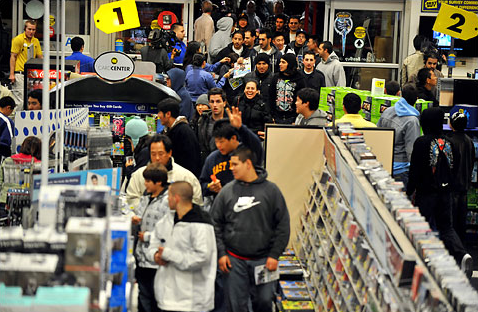
‘Tis the holiday season, and we all know what that means: the mecca of consumerism that is America will ring out with the song of overworked cash registers throughout the land. Anyone who has been anywhere near a mall in America in the month of December knows how incredibly unpleasant it is to be swarming all over shopping mall wares while other people are all up in your business. In honor of this time of cheer, materialism and accidental stranger touching, we present the 10 days of Christmas…Consumerism (What? You wanted 12? I had finals!).*


Product contagion is a well-studied topic in consumer behavior. Essentially, much like the way humans can catch a disease, products can “catch” qualities via associations with other products or people. The proximity of the products operates as the basic idea behind product contagion, i.e. a product that is located close to another product may take on some characteristics of that other product, and affect consumer perceptions. For instance, products that have an equal chance of gain, like a free sample, tend to be seen as higher value when they are clustered together, while products with an equal chance of loss, like defected products, are seen as less desirable when located close to other defective products.1

There has also been work on product contagion when the proximity is to a disgusting product. Researchers have found evidence that a product location next to a disgusting product can cause the non-disgusting product to “catch” disgusting qualities, especially when packaging is clear and regardless of whether or not the two products are physically touching.2 This association has proven to be long-lasting, with impressions of disgust permanently attaching themselves to the non-disgusting product.2 So, basically, the next time you really want the last of something at the grocery store but you can’t buy it right now, put it next to the adult diapers and you’re probably home free.

Keep shopping and come and see us tomorrow for consumer contamination. Talk about a bad touch.

*The Christmas reference in this title is being made by a born and bred atheist and purely for Google/seasonal reasons. No offense meant to anyone, and certainly no religious preferences here at SocialPsyQ!


  1. Mishra, A. (2009). Influence of contagious versus noncontagious product groupings on consumer preferences. Journal of Consumer Research, 36(1), 73-82.
  1. Morales, A. C., & Fitzsimons, G. J. (2007). Product contagion: Changing consumer evaluations through physical contact with “disgusting” products. Journal of Marketing Research, 44(2), 272-283.

The Skinny on Online Dating: Psychology at work

Image from Mashable.com

          Image from Mashable.com

In Meg Jay’s book The Defining Decade: Why your twenties matter—and how to make the most of them now, she makes a point that online dating is a good idea, because it matches people based on personality traits-something that predicts long-term relationship success. In real life, relationships may form because two people happen to be at the same bar, or have a mutual friend. But research has shown time and time again that similarity attracts.1,2 Given the way online dating sites work, by matching people based on compatibility of personality and preferences, it is not surprising that more than a third of marriages now start online. And, according to the Pew Research Center’s 2013 report on online dating, 38% of single American adults looking for a partner have used online dating sites or apps. Of Americans who found their spouse online, they report higher marital satisfaction and lower divorce rates than couples that met IRL.3

With the current popularity of apps like Tinder and sites like OkCupid, it’s impossible to ignore the psychological field experiment that is online dating. There are 3 areas of psychology research that are incredibly relevant to online dating: Personality, self-presentation and deception.

Personality– Many online dating sites require users to fill out a battery of questions, several of which are focused on personality characteristics. A question, “Do you like wild parties?” appears in OkCupid’s personality questionnaire, which psychologists may recognize as a version of the sensation-seeking personality item “I like wild parties.”4 In addition to direct adaptations of established personality questionnaires, questions ask about cleanliness and keeping promises (conscientiousness), new experiences and adventurousness (openness to experience), if you would do things just because your partner wanted to (agreeableness), if you like to talk or meet new people (extraversion) and if you get jealous and worried about things you can’t change (neuroticism). As you can see, and as Meg Jay suggested, these sites evaluate users largely based on what is known as the Big 5 of personality.5,6 Research has found that romantic attachment styles relate to the Big 5, and various personality traits correlate with specific relationship outcomes, like neuroticism and decreased relationship satisfaction.7,8

Self-presentation– With the high stakes of finding a meaningful relationship, online dating users may choose to engage in self-presentation: the practice of managing the impressions we make on others.9 Research suggests that self-presentation motives may be especially salient because creating online content gives people an opportunity to overtly self-promote.10 Evidence suggests that it may be easier to self-present in a positive light than one may think. Being seen as socially expressive, presenting an ideal self, engaging in self-disclosure and “matching your profile” when meeting in person can all contribute to self-presentational success.11,12,13,14 Self-presentation concerns stay consistent throughout the lifespan, with aging men still preferring youth and physical attractiveness, and leveraging information about status on their own online dating profiles.15

Deception– Sometimes self-presentation goes beyond a favorable description of the self, and veers toward untruthfulness. Studies by Toma and Hancock found that people who were rated lower in attractiveness by independent raters were more likely to lie about physical descriptions, and use an “enhanced” profile picture.16 Another study by the same group of researchers found that women were more likely to use deceptive pictures than men, using younger pictures, or pictures taken by a professional, among other tactics; but that only about 1/3 of profile pictures were rated as inaccurate.17 Yet another study found that men were more likely to post deceptive information about financial assets, relationship goals and their own interests and attributes, and women were more likely to post misleading information about their weight.18

While the increasing popularity of online dating indicates it may be the way of the future, the psychological principles behind it are time-tested and peer-approved.

Our area head, Dr. Mark Leary, is one of the foremost experts on self-presentation. You can find his self-presentation-related Google Scholar results here.

  1. Byrne, D. (1961). Interpersonal attraction and attitude similarity. The Journal of Abnormal and Social Psychology, 62(3), 713-715.
  1. Byrne, D. & Griffitt, W. (1969). Similarity and awareness of similarity of personality characteristics as determinants of attraction. Journal of Experimental Research in Personality, 3(3), 179-186.
  1. Cacioppo, J. T., Cacioppo, S., Gonzaga, G. C., Ogburn, E. L., & VanderWeele, T. J. (2013). Marital satisfaction and break-ups differ across on-line and off-line meeting venues. Proceedings of the National Academy of Sciences of the U.S.A, 110(25), 10135-10140.
  1. Hoyle, R. H., Stephenson, M. T., Palmgreen, P., Pugles Lorch, E., Donohew, R. L. (2002). Reliability and validity of a brief measure of sensation seeking. Personality and Individual Differences, 32, 401-414.
  1. Goldberg, L. R. (1990). An alternative “Description of Personality”: The big-five factor structure. Journal of Personality and Social Psychology, 59(6), 1216-1229.
  1. Gosling, S. D., Rentfrow, P. J., & Swann Jr, W. B. (2003). A very brief measure of the Big-Five personality domains. Journal of Research in Personality, 37, 504-528.
  1. Shaver, P. R. & Brennan, K. A. (1992). Attachment styles and the “Big Five” personality traits: Their connections with each other and with romantic relationships outcomes. Personality and Social Psychology Bulletin, 18(5), 536-545.
  1. White, J. K., Hendrick, S. S., & Hendrick, C. (2004). Big five personality variables and relationships constructs. Personality and Individual Differences, 37(7), 1519-1530.
  1. Leary, M. R. & Kowalski, R. M. (1990). Impression management: A literature review and a two-component model. Psychological Bulletin, 107(1), 34-47.
  1. Schau, H. J. & Gilly, M. C. (2003). We are what we post? Self-presentation in personal web space. Journal of Consumer Research, 30(3), 385-404.
  1. Weisbuch, M., Ivcevic, Z., & Ambady, N. (2009). On being liked on the web and in the “real world”: Consistency in first impressions across personal webpages and spontaneous behavior. Journal of Experimental Social Psychology, 45(3), 573-576.
  1. Ellison, N. B., Heino, R. D., & Gibbs, J. L. (2006). Managing impressions online: Self-presentation processes in the online dating environment. Journal of Computer-Mediated Communication, 11(2), 415-441.
  1. Gibbs, J. L., Ellison, N. B., & Heino, R. D. (2006). Self-presentation in online personals: The role of anticipated future interaction, self-disclosure, and perceived success in internet dating. Communication Research, 33(2), 152-177.
  1. Whitty, M. T. (2008). Revealing the ‘real’ me, searching for the ‘actual’ you: Presentations of self on an internet dating site. Computers in Human Behavior, 24(4), 1707-1723.
  1. Alterovitz, S. S. R. & Mendelsohn, G. A. (2009). Partner preferences across the life span: Online dating by older adults. Psychology and Aging, 24(2), 513-517.
  1. Toma, C. L. & Hancock, J. T. (2010). Looks and lies: The role of physical attractiveness in online dating self-presentation and deception. Communication Research, 37(3), 335-351.
  1. Hancock, J. T. & Toma, C. L. (2009). Putting your best face forward: The accuracy of online dating photographs. Journal of Communication, 59, 367-386.
  1. Hall, J. A., Park, N., Song, H., & Cody, M. J. (2010). Strategic misrepresentation in online dating: The effects of gender, self-monitoring, and personality traits. Journal of Social and Personal Relationships, 27(1), 117-135.

Psych in Sum: The Google Effect

Screen Shot 2014-11-20 at 11.06.08 PM

               Image from Google.com

Do you ever wonder what the internet is doing to our brains? You’re not alone!

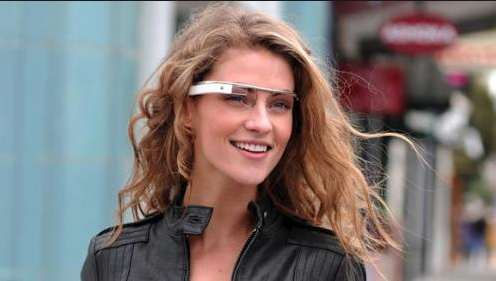
In 2011, Betsy Sparrow, Jenny Liu and Dan Wegner published an article about the “Google effect,” a phenomena where people neglect to commit information to memory when they know they can easily find it later. Across 4 studies, Sparrow et al found that participants were more likely to remember where they could find information (i.e. the file location on a computer), than the information itself (2011). So the next time you find yourself looking up the address to your favorite bar to tell your Uber driver for the umpteenth time, commit it to memory and best the Google effect!

Sparrow, B., Liu, J., & Wegner, D. M. (2011). Google effects on memory: Cognitive consequences of having information at our fingertips. Science, 333(6043), 776-778.

Get Psyched for Halloween!

Image from Nutritious Eats

           Image from Nutritious Eats

If you’re like me, some of your favorite childhood memories are of Halloween. You get to dress up like someone or something else, go to strangers’ houses and ask them for treats, cause a little mischief and binge on candy. But the best thing about Halloween? There’s a lot of social psychology at work.

Anonymity: Anonymity may make people more susceptible to group influence.1 This could even help to account for an increase in criminal activity on Halloween. Visual anonymity, specifically, seems to increase identification with the group, be that delinquent peers or society in general.2 Some classic studies have found a direct correlation between stealing and Halloween costumes.3,4 Researchers found that trick-or-treaters who were both anonymous and with a group of other children were more likely to steal candy and money when given the chance.3 Another study found that Halloween masks could elicit a state of deindividuation*, and found evidence that children in masks were more likely to take more candy than unmasked children, when the experimenter was not in the room.4

Norms: Usually, if you knocked on someone’s door at night dressed as a blood-sucking Zombie demanding candy, people would freak out and call the police. But on Halloween, this would be expected, and norms would be altered for the night. You might even be called a party pooper if you don’t make an effort to dress in costume. These kinds of social norms have long been of interest to social psychologists. Descriptive norms are social rules transmitted by others; so when you show up to the Halloween party as the only one in costume, all of a sudden, you feel out of place, even though you would fit in at a more festive party.5 Injunctive norms speak to what should be done, or what is socially endorsed, i.e. you should go to the party in costume because you are supposed to wear a costume on Halloween.5 Social norms are often positive, but they can also lead to higher levels of conformity, riskier decisions and worse decisions through consensus.6,7,8,9 Norms are also at work when people throw costume parties, visit the pumpkin patch or go to haunted houses. Not only does the seasonal social acceptance of the activity encourage us to partake in some strange stuff, our desire to act in accordance with norms is a billion dollar industry ($11.3 to be exact).

Prosocial behavior: The act of handing out free candy to kids is both a Halloween norm, and an example of prosocial behavior. Prosocial behavior is any behavior that works for the good of the group, rather than the good of the self. Things like sharing, taking turns and common courtesy are all types of prosocial behavior. Prosocial behavior has a lot of individual and societal benefits like lower perceptions of competition, higher need for achievement, higher social cognitive abilities in children and may even be linked to higher levels of altruism.10,11,12

It’s clear that our Halloween traditions involve social psychology, from the norms in place that dictate our Halloween activities, the anonymity that allows for increased mischief, and the prosocial nature of some of our Halloween traditions. So this Friday, put your SocialPsyQ to work! What are some social psychology phenomena you see on Halloween?

* Deindividuation is the loss of self-awareness in groups.

  1. Postmes, T., Spears, R., Sakhel, K., & de Groot, D. (2001). Social influence in computer-mediated communication: The effects of anonymity on group behavior. Personality and Social Psychology Bulletin, 27(10), 1243-1254.
  2. Lea, M., Spears, R., & de Groot, D. (2001). Knowing me, knowing you: Anonymity effects on social identity processes within groups. Personality and Social Psychology Bulletin, 27(5), 526-537.
  3. Diener, E., Fraser, S. C., Beaman, A. L., & Kelem, R. T. (1976). Effects of deindividuation variables on stealing among Halloween trick-or-treaters. Journal of Personality and Social Pschology, 33(2), 178-183.
  4. Miller, F. G., & Rowold, K. L. (1979). Halloween masks and deindividuation. Psychological reports, 44(2), 422
  5. Cialdini, R. B., & Trost, M. R. (1998). Social influence: Social norms, conformity and compliance. In D. T. Gilbert, S. T. Fiske, & L. Gardner (Eds). The handbook of social psychology, Vols. 1 and 2 (4th ed.), (pp. 151-192). New York, NY, US: McGraw-Hill.
  6. Sherif, M. (1937). An experimental approach to the study of attitudes. Sociometry, 1(1/2), 90-98.
  7. Asch, S. E. (1956). Studies of independence and conformity: I. A minority of one against a unanimous majority. Psychological Monographs: General and Applied, 70(9), 1-70.
  8. Stoner, J. A. F. (1968). Risky and cautious shifts in group decisions: The influence of widely held values. Journal of Experimental Social Psychology, 4(4), 442-459.
  9. Postmes, T., Spears, R., & Cihangir, S. (2001). Quality of decision making and group norms. Journal of Personality and Social Psychology, 80(6), 918-930.
  10. Puffer, S. M. (1987). Prosocial behavior, noncompliant behavior, and work performance among commission salespeople. Journal of Applied Psychology, 72(4), 615-621.
  11. Denham, S. A. (1986). Social cognition, prosocial behavior, and emotion in preschoolers: Contextual validation. Child Development, 57(1), 194-201.
  12. Eisenberg, N., & Miller, P. A. (1987). The relation of empathy to prosocial and related behaviors. Psychological Bulletin, 101(1), 91-119.

Face Off: Beauty is not always better

Image from ABC News

         Image from ABC News

Since Renee Zellweger attended the Elle Awards on Monday, I’ve seen several news articles about her “unrecognizable” face. As other outlets have noted, people seem to be surprised that Zellweger is no longer the spunky 20 year old she was in Jerry McGuire, or that she would turn to cosmetic enhancements to preserve her beauty. But really, it’s not very surprising. Being beautiful is pretty complex for women. A meta-analysis headed by Alice Eagly found consistent evidence that people ascribe more positive traits and life outcomes to attractive people.1 But other research found that men benefitted from being handsome across hiring situations, but that women only benefitted from being attractive if they were applying for a non-managerial position.2 More troubling, social comparison theory has been applied to the link between thinness pressure and bulimic symptoms.3 There is, however, evidence that getting facial plastic surgery can help increase self-esteem.4 Since we know how influential beauty is, we shouldn’t be shaming any celebrities or peers about their physical shortcomings, or attempts to correct them.

  1. Eagly, A. H., Ashmore, R. D., Makhijani, M. G., & Longo, L. C. (1991). What is beautiful is good, but…: A meta-analytic review of research on the physical attractiveness stereotype. Psychological Bulletin, 110(1), 109-128.
  2. Heilman, M. E., & Saruwatari, L. R. (1979). When beauty is beastly: The effects of appearance and sex on evaluations of job applicants for managerial and nonmanagerial jobs. Organizational Behavior and Human Performance, 23(3), 360-372.
  3. Irving, L. M. (1990). Mirror images: Effects of the standard of beauty on the self-and body-esteem of women exhibiting varying levels of bulimic symptoms. Journal of Social and Clinical Psychology, 9(2), 230-242.
  4. Arndt, E. M., Travis, F., Lefebvre, A., Niec, A., & Munro, I. R. (1986). Beauty and the eye of the beholder: Social consequences and personal adjustments for facial patients. British Journal of Plastic Surgery, 39(1), 81-84.

Mental Health Stigma, or, Why We Should Leave Amanda Alone

Image from NY Daily News

Image from NY Daily News

The inevitable has happened: Amanda Bynes has been put under a 72-hour psychiatric hold in LA. Her parents are seeking conservatorship of her affairs after over a year of bizarre behavior, most recently in the form of some severe Twitter allegations* about her father abusing her as a child, and a tweet recanting her statement and blaming it on a microchip her father had implanted in her brain. This is a familiar story. One can easily remember Britney Spears going through similar issues, attacking paparazzi with an umbrella and famously shaving her head. Or Lindsay Lohan, landing in court case after court case, and suffering from substance abuse. But it’s all too easy to forget that these celebrities are people, and they are going through (or have gone through) some mental health issues. And so have a lot of people.

Mental health diagnoses can be things like phobias, anxiety disorders, eating disorders, depression, substance abuse and schizophrenia. According to the National Institute of Mental Health (NIMH), in 2012 approximately 4.1% of US adults were suffering, or had suffered, with a serious mental illness within the last year. That might sound small, but that only accounts for a serious mental health diagnosis. The same year approximately 18.6% of US adults had suffered from mental illness in general. That’s almost 1 in 5! So, in reality, what Bynes is going through is a common experience, and she doesn’t deserve increased scrutiny about her mental health state just because she’s been in the public eye since she was seven.* * Let’s make like Britney and leave Amanda alone.

There’s a well-known relationship between stress and mental disorders. Obviously, the attention a celebrity receives is bound to be stressful, but sources of stress can range from your job to childhood abuse. Some illnesses even appear to be more common in populations of people who experienced some type of extreme or chronic stress (1,2). Working full time and juggling school from a young age could definitely act as a source of stress, which may help to explain the incidence of mental disorder in people who were child stars (and, similarly, in impoverished populations; 3). Clinicians believe that something called the gene by environment interaction (G x E) plays a large role in mental illness (4,5). Basically, it means that even if you have some sort of hereditary vulnerability to a mental illness, it may take environmental stressors to actually end up developing the disorder. Illnesses like Post-Traumatic Stress Disorder (PTSD) may be especially impacted by environmental factors. Soldiers deployed to Iraq during Operation Iraqi Freedom had a PTSD prevalence rate of 19.3% (6). Mental illness may ultimately be something that is brought out in us by our circumstances, rather than something that we “have.”

Regardless of how people come to be diagnosed with a mental disorder we know that mental illnesses are just as debilitating as physical ones. People living with mental illness may suffer from symptoms ranging from anhedonia and rumination, to things like delusions and suicidal thoughts. In fact, according to the National Alliance on Mental Illness, 90% of the people who commit suicide have received a mental health diagnosis. One of the reasons may be the amount of stigma that surrounds mental illness. Stigma can reduce self-esteem and opportunities to be social, and increase stereotyping and prejudice (7). There is also evidence that populations that endure prejudice are more likely to develop a mental illness, illustrating the complexity of the G x E interaction (8, 9, 10).

So let’s give Bynes’ bizarre behavior a pass. If she’d been diagnosed with cancer, people would empathize with her and leave her alone instead of hounding her and putting her in the spotlight. Mental illness is just as serious as any illness a person can have, and it’s past time we learned to see people beyond their maladies, regardless.

*Anyone who knows me well will know how much it pained me to write the phrase “severe Twitter allegations.”

**Ok, ok, she was 8 in this one. Sue me. I didn’t have the energy to deep Google it. I also totally had those Barbie™ hair extensions.

If you or someone you know is considering suicide, there is help. Visit the National Suicide Prevention Lifeline the American Foundation for Suicide Prevention, helpguide.org , or call the National Suicide Prevention Hotline (1-800-273-8255).


  1. Belle, D. (1990). Poverty and women’s mental health. American Psychologist, 45(3), 385-389.
  1. Horwitz, A. V., Widom, C. S., McLaughlin, J., & White, H. R. (2001). The impact of childhood abuse and neglect on adult mental health: A prospective study. Journal of Health and Social Behavior, 42(2), 184-201.
  1. Liem, R., & Liem, J. (1978). Social class and mental illness reconsidered: The role of economic stress and social support. Journal of Health and Social Behavior, 19(2), 139-156.
  1. Lesch, K. P. (2004). Gene-environment interaction and the genetics of depression. Journal of Psychiatry and Neuroscience, 29(3), 174-184.
  1. van Os, J., Rutten, B. P. F., & Poulton, R. (2008). Gene-environment interactions in Schizophrenia: Review of epidemiological findings and future directions. Schizophrenia Bulletin, 34(6), 1066-1082.
  1. Hoge, C. W., Castro, C. A., Messer, S. C., McGurk, D., Cotting, D. I., & Koffman, R. L. (2004). Combat duty in Iraq and Afghanistan, mental health problems, and barriers to care. New England Journal of Medicine, 351, 13-22.
  1. Corrigan, P. (2004). How stigma interferes with mental health care. American Psychologist, 59(7), 614-625.
  1. Mays, V. M., & Cochran, S. D. (2001). Mental health correlates of perceived discrimination among lesbian, gay, and bisexual adults in the United States. American Journal of Public Health, 91(11), 1869-1876.
  2. Meyer, I. H. (1995). Minority stress and mental health in gay men. Journal of Health and Social Behavior, 36(1), 38-56.
  3.  Meyer, I. H. (2003). Prejudice, social stress, and mental health in lesbian, gay, and bisexual populations: Conceptual issues and research evidence. Psychological Bulletin, 129(5), 674-697.


Bias Blind Spot

Screen Shot 2014-10-05 at 6.05.11 PM

Image from Digital Journal

Ah, it’s that time of year again. Pumpkin spice everything, apple cider, political elections… And of course, with elections come those discussions we all know and love about how _______ party is full of it and _______ party has all the answers. Having a conversation with someone with different beliefs than you is often an exercise in futility, with one of you insisting that the other one doesn’t know jack. One of the reasons that we may engage with others this way is bias blind-spot. Bias blind spot is the tendency to easily recognize bias in others, but an inability to recognize it in ourselves. In a group of studies, participants rated themselves as less susceptible to biases than other people, were more likely to consider their assessments of themselves as objective even after being told they could be biased, and were more likely to say that other people’s attributions about performance on a test were biased, but that their own attributions were not (1). So next time you pull onto condescension highway, check your bias blind spot first.

1. Pronin, E., Lin, D.Y., & Ross, L. (2002). The bias blind spot: Perceptions of bias in self versus others. Personality and Social Psychology Bulletin, 28(3), 369-381.