Forecasting Self-Control

Today’s guest writer is Andrew Hall, a current social psychology PhD student at Northwestern University.head 8

Have you ever established plans to maintain a healthy weight or to exercise more, only to find that the presence of sweets or the temptation of television steers you away from your lofty goal? If you answered yes to this question, you may not be alone: people might frequently craft flawed predictions of their own ability to exert self-control in future situations, making for disagreements between what is predicted and what is actually achieved when trying to exert self-control. In a new line of research, social psychologists are investigating whether this perceived inaccuracy in self-control predictions—termed “self-control forecasting” in the literature—is a commonly-occurring phenomenon in human behavior and, potentially, a quality that could impact the way that we approach goal-setting and goal-attainment moving forward.

But what exactly is self-control? We define self-control as the process by which one alters one’s immediate thoughts, emotions, or behaviors in order to promote future goals or idealized states [1]. In other words, self-control translates to restraining current impulses (e.g., watching television) in favor of actions that move a person toward a desired future state (e.g., paying bills on time). If there are inaccuracies in the way that one “forecasts” self-control, then there are discrepancies between one’s predicted ability to resist these current impulses in favor of desired future states and one’s actual behavior when confronted with the self-control situation.

Although the qualities of self-control predictions have not been thoroughly investigated in the psychological literature, anecdotally, we know that these predictions may not be consistently accurate. This reasoning largely draws from research on a related subject, that of affective forecasting. Affective forecasting describes a person’s ability to predict his or her future emotional or “affective” states [2][3]. People have been shown to make flawed predictions of their future affective states, tending to overestimate both the intensity and duration of emotional reactions [2][4][3]. Researchers of self-control forecasting attempt to draw this same conclusion about behavioral prediction: could it be possible that humans are just as bad at predicting future ability to exert self-control as they are at predicting future affective states?

An initial exploratory analysis conducted at Duke University suggests that this may be the case. When asked to describe a time in the past in which they made inaccurate self-control predictions, all 192 of the respondents in a recent survey were able to provide rich descriptions of experiences in which they made self-control predictions in response to a temptation that differed from their realized behaviors. That respondents were able to detail instances of self-control forecasting inaccuracies with such rich description and only minimal prompting suggests that such prediction inaccuracies are not unusual to the average person. Extending upon this conclusion, the categories of temptations from the responses were very diverse, with responses that included food, sex, exercise, and relaxation, among others. This diversity suggests that these inaccuracies may characterize self-control predictions in general and not just those associated with a specific type of temptation. Additionally, though they were permitted to respond about a temptation that occurred within the past month, all participants detailed temptations that occurred within the past week, providing further evidence that these prediction inaccuracies are fairly common occurrences. Taken together, these results suggest that inaccurate self-control predictions are not unheard of in a general sample and may actually be commonplace occurrences.

Although self-control forecasting research is still in an early stage, these initial exploratory results are promising. It appears as though forecasts of future self-control abilities are not always accurate and that these inaccuracies are not infrequent occurrences. However, further studies are needed in order to determine the magnitude and frequency of this effect. In the meantime, many of us can at least be reassured that we are not alone in our self-control prediction inaccuracies, lofty self-improvement goals be damned.


Andrew hails from Charlotte, NC, where he lived before shuffling slightly north to receive a Bachelor’s degree from Duke University. At Duke, he completed research investigating social psychological phenomena related to the self and self-regulation. He is currently a graduate student in the PhD program in social psychology at Northwestern University. His research focuses on the social side of self-regulatory functioning, as well as how self-implemented goals and mental ideations about identity affect one’s ability to achieve appropriate self-regulatory control. Outside of the lab, Andrew enjoys going on runs in the sweltering southern heat and cooking dishes that have been described by critics as “edible.”


1-Baumeister, R. F., Vohs, K. D., & Tice, D. M. (2007). The strength model of self-control. Current Directions in Psychological Science, 16 (6), 351-355.
2-Bueller, R., & McFarland, C. (2001). Intensity bias in affective forecasting: The role of temporal focus. Personality and Social Psychology Bulletin, 27, 1480-1493.
3-Wilson, T. D., & Gilbert, D. T. (2005). Affective forecasting. Current Directions in Psychological Science.
4-Gilbert, D. T., Pinel, E. C., Wilson, T. D., Blumberg, S. J., & Wheatley, T. P. (1998). Immune neglect: A source of durability bias in affective forecasting. Journal of Perosnality and Social Psychology, 75, 617-638.

social psych snapshot: week of 10/5/15


Hannah
This week, Hannah provides the research highlights of early fall 2015!

You may already know about the cognitive consequences of Google but this article explores some social consequences of Google and technology more broadly.

Promising lab research suggests that comedy may be an effective means of coping with emotional distress.

New research conceptually replicates an old finding – that taking acetaminophen (Tylenol) can blunt negative emotions – and extends it, suggesting that acetaminophen may blunt strong positive and negative emotions alike.

Hm… I won’t be trying this unusual method of enhancing self-control based on the theory of inhibitory spillover: that trying to control your behavior in one domain might help you control your behavior in another.


Hannah graduated with a degree in Psychology from Reed College, and worked in educational research and meta-analysis as a lab manager at Duke University before entering the Social Psychology PhD program in 2014. Her research focuses on social psychological processes at work in educational contexts.

Calling All Perfectionists!

The-Perfectionist-Scale-Perfectionist Guide to Results Blog The-Perfectionists-Guide-to-Results-Blog


Look familiar? Are these the standards you use to assess your success? If so, you may be on your way to psychological burnout. A new meta-analysis of 43 studies published by Personality and Social Psychology Review found that some aspects of perfectionism can lead to negative psychological outcomes. Now, if you are a recovering perfectionist, you might be thinking,

Duh gif

“I didn’t need a meta-analysis to tell me that!”


I’m with you. I, too, have struggled with perfectionism and, subsequently, feeling burned out and exhausted. But this meta-analysis is important for several reasons. First, not only does it present empirical evidence to support people’s personal experiences and anecdotes, but it also condenses and provides a robust summary—an analysis, if you will—of the findings from 43 studies, all while taking into account additional factors, such as the domain (e.g., school, work, sports). In other words, solid findings that you are not imagining things and more details to explain what you might be experiencing. Let’s face it: your perfectionism is probably getting you down.

Researchers Hill and Curran use the following definition of perfectionism and burnout:

  • Perfectionism: multidimensional tendency to have exceedingly high standards and to be extremely self-critical1
    • Typically expressed through strivings, the setting of high personal standards and an aim for perfection, and concerns, or a fear of making mistakes and judging oneself harshly for them (See above images)
  • Burnout: a stress-induced psychosocial syndrome associated with motivational, performance, and psychological deficits2
    • Symptoms: emotional exhaustion, cynical attitude, perceived decreases in personal accomplishments and efficacy2
    • May resemble something like the images below


The primary finding indicates that perfectionism and burnout are positively correlated. That is, the more perfectionism a person displays, the higher rates of burnout they’re likely to experience, and this was true especially in the work domain (we’ll discuss that later). However, aspects of perfectionism are not equally at fault. Perfectionistic concerns, rather than perfectionistic strivings, accounted for most of the correlation with burnout.  In other words, and unsurprisingly, the tendency to be extremely self-critical and to judge oneself harshly are more harmful than setting and striving for high personal standards. In fact, perfectionistic strivings may provide a small buffer against the negativity associated with negative self-evaluation, particularly in school/education or sports.

The work domain was unique in its findings. For people dealing with burnout at work, strivings were found to be less effective at buffering against components of perfectionistic concerns, like cynicism and exhaustion. The researchers suggest that people may feel less in control at work than in school or sports given that a “perfect” work performance is typically more ambiguous. This finding deserves particular attention from ambitious high school or college graduates who are entering the workforce and potentially transitioning to a job with less tangible performance feedback.

Burnout is not inevitable, even if you identify as a perfectionist. Factors such as resilience, ability to cope with stress, and social support can all provide protection against burnout and its associated symptoms.2 So can learning to say no—over-commitment may also contribute to psychological distress.

Keep in mind that this meta-analysis describes correlational relationships. Perfectionism does not cause burnout but, rather, is closely associated with it and certainly a contributing factor. If you’d like to learn more specifics about this particular meta-analysis, check out the references below. Let’s just ignore the irony of me wanting to perfect this post before publishing it.


1-Frost, R.O., Marten, P., Lahart, C., & Rosenblate, R. (1990). The dimensions of perfectionism. Cognitive Therapy and Research, 14, 449-468.

2-Hill, A.P. & Curran, T. (2015). Multidimensional perfectionism and burnout: A Meta-Analysis. Personality and Social Psychology Review, 1-20.

Getting ish done: Setting and achieving realistic goals

Summer is a time when people set new goals for themselves. It means more time for exercising, gardening, catching up with friends, or organizing your place. It could also mean traveling, more work, or any combination of these activities. But setting goals does not guarantee success of goals…

Goals Pie Chart
Why is it easier to achieve some goals than others? Aside from the obvious—some goals are genuinely more difficult to achieve, like buying a home compared to earning a free coffee after purchasing 12 coffees prior—other factors may be influencing your success. Using goal research, the following questions serve as a primer to increase your likelihood of successful goal pursuit.
1. How is the goal defined? The more concretely a goal is defined, the easier it is to measure progress toward goal achievement. For example, let’s imagine that someone has a goal to eat healthier. An admirable and respectable goal, indeed, but what does eating healthier mean to this person? What would success for this goal look like? The more specifically the goal is defined, the easier it is to track progress toward goal achievement. Maybe eating healthier means eating a banana every day. Maybe it means limiting dessert to twice a week. Regardless of the form they take, setting tangible markers of progress increases your likelihood of success [1].

2. Do you think you can do it? Setting realistic goals is not new advice, but it bears repeating. Your expectations of goal achievement influence your progress toward and your commitment to your goal. If you expect yourself to crash and burn, then you probably will. Many of us have experienced this firsthand. If you have a goal of reducing social media usage, but you doubt that you can break up with Facebook, then readjusting your goal to account for your own preferences is recommended. Sometimes this translates into setting smaller and manageable goals first, and then working up to a greater, and ultimately desired, end goal. Maybe you strive to reduce your Facebook usage gradually, or you eliminate Twitter or Tumblr first, for example.

3. How close are you to achieving this goal? Beginning a new goal versus being near goal completion typically requires different strategies. People often adjust their goal pursuit strategies without realizing it depending on the particular stage of goal pursuit. For example, some research suggests that people exaggerate any progress made in the beginning of pursuit to make success seem more attainable and downplay progress toward the end when close to goal completion to highlight the need for continued effort [2]. Other work suggests that perceiving progress toward a goal (i.e., believing that you’re closer to goal completion) leads to relaxed pursuit of the goal [3], also known as coasting. Coasting is when people don’t feel the need to work as hard toward the goal, because they’re doing just fine [4]. Both of these processes occur at different times depending on the type of goal you have (see questions 1 and 4).

4. Does this goal require maintenance? Some goals are obviously completed once you achieve them. Earning a degree, for example. While achieving this goal may have required maintaining certain behaviors over an extended period, goal achievement is obvious and clear-cut: you have your degree. Not surprisingly, many goals are not like this. Health goals are a prototypical maintenance goal. They’re never truly completed. Even if an initial first part has been achieved, such as reaching a goal weight, the maintenance phase will likely continue indefinitely, which is why continued success is difficult without additional reinforcements (to be discussed in a later post!). Maintenance goals often require rewards, consistent checking in with yourself about your progress, and, sometimes, flexibility regarding the means to goal achievement.

Goals are complicated. Rarely, if ever, do people pursue a single goal at any time [5]. We are continuously juggling and re-prioritizing our goals, big and small, every day of our lives. Doing so is undoubtedly hard work, and these questions certainly do not capture every element of goal pursuit. However, if you’re struggling to finish something or you need a refresher, ask yourself the questions above. They’re a good place to start.

Chibird.com


References
1 – Kivetz, R., Urminsky, O., & Zheng, Y. (2006). The goal-gradient hypothesis resurrected: Purchase acceleration, illusionary goal progress, and customer retention. Journal of Marketing Research, 43, 39-58.
2 – Huang, S. C., Zhang, Y., & Broniarczyk, S. M. (2012). So near and yet so far: The mental representation of goal progress. Journal of Personality and Social Psychology, 103, 225-241.
3 – Fishbach, A., & Dhar, R. (2005). Goals as excuses or guides: The liberating effect of perceived goal progress on choice. Journal of Consumer Research, 32, 370-377.
4 – Carver, C.S. & Scheier, M.F. (2011). Self-regulation of action and affect. In K.D. Vohs & R.F. Baumeister (Eds.), Handbook of self-regulation: Research, theory, and applications (2nd ed.) (3-21). New York: Guilford Press.
5 – Kruglanski, A. W., Shah, J. Y., Fishbach, A., Friedman, R., Chun, W. Y., & Sleeth-Keppler, D. (2002). A theory of goal systems. Advances in experimental social psychology, 34, 331-378.

Beyond the hate crime binary: Implicit bias in the Chapel Hill shooting

This post was co-written by Jen and guest blogger Cara, a city and regional planning student and social justice activist.

The recent triple murder of three Muslim Americans Yusor Abu-Salha, Deah Barakat, and Razan Abu-Salha in Chapel Hill on Tuesday night has rocked the Triangle, and its effects have reverberated across the globe. In addition to the devastating sadness and feelings of staggering unfairness precipitated by this horrific crime, the motive of the killer and whether the act was a hate crime is also being debated.

Craig Stephen Hicks, a 46 year old neighbor of Yusor, Deah, and Razan, has been charged with three counts of first degree murder after turning himself in to authorities. He and his lawyer claim that he killed them because of a parking dispute that escalated into violence, but a lot of people aren’t buying it. And neither are we.

Deah’s sister has asked that their murders be treated as a hate crime. Yusor and Razan’s brother believes the same. We also believe that this tragedy was motivated by anti-Muslim feelings and hate. This crime may not fit the legal definition of a hate crime, but that doesn’t preclude it from being one.

The debate over whether this fits the definition of a hate crime has to do with whether or not Hicks explicitly voiced his prejudice against Muslim people. His Facebook page has numerous posts where he mocks religion as an idea – Hicks is an adamant atheist – and a few where he calls out specific groups, such as a post calling Christians opposed to the building of a mosque near ground zero hypocritical, and another re-post that says if financial aid, mediation, and arms cannot bring peace to the Middle East, atheism can. But though he is a proud gun owner – he brags in one post about the weight of one of his loaded guns – he doesn’t seem to have expressed violent intentions toward Muslims specifically. The FBI is looking into it, but regardless of whether they find anything, the motivation seems to be clear.

Most people are more familiar with types of explicit prejudice or explicit bias. People who are explicitly prejudiced against Muslims, for example, know they are biased and may make statements to that effect or pointedly treat Muslim people differently than they would other people. This type of prejudice is also much less likely to be condoned in society. However, a deeper hidden kind of prejudice called implicit bias can guide people’s actions and thoughts even if they don’t consciously believe that they are biased.

Implicit bias is more likely what’s at play here. Implicit bias is an automatic stereotype or prejudice that someone maintains without necessarily being aware of it.1 Social psychologists have been studying implicit biases and their effects on behavior and society for years. These biases are so deeply ingrained and automatic that they often don’t reach the surface of consciousness, and yet may still guide our actions and behavior.2

Hicks’s wife claims that in her husband’s eyes “everyone is equal.” The fact that our implicit biases run so deep that we often aren’t even aware of them makes them particularly insidious, because here’s the thing: Hicks can genuinely believe that he didn’t target Deah, Yusor, and Razan because of their religion, but that doesn’t mean it’s true. Even if he wasn’t thinking about the fact that his victims were Muslims in the front of his mind, somewhere in his brain, the automatic part was looping a tape full of subtle but powerful beliefs and stereotypes that more likely than not allowed this disagreement to escalate dramatically.

Some evidence does exist to suggest that Hicks wasn’t simply a grumpy disgruntled neighbor but was actually targeting this family because of their religion. Namely, one of Razan’s best friends stated that Hicks didn’t bother Deah at all until his new wife and her sister came to live with him, two women who looked more traditionally Muslim with their hijabs than did Deah. Deah and Yusor’s relatives also offered previous incidents where Hicks threatened Deah and Yusor over their alleged noisiness while carrying his shotgun. Would he have approached these situations in the same way had Deah, Yusor, and Razan not been Muslim? Our guess is no.

There is no way to prove that implicit biases motivated or fed this crime, which feels incredibly frustrating. It also forebodes an increased misunderstanding if the families of the victims and the community at large see a hate crime here, but authorities cannot prove it. We believe that it is essential to get a discussion of not just explicit hate speech and discrimination but an understanding of implicit biases as well into the societal dialogue—implicit bias can also likely help to explain the Mike Brown shooting and other crimes across racial and cultural lines committed by people who swear they “see everyone equally.”

So, how does this directly affect you, and what can you do in your own life? Most implicit biases are on a smaller minor scale. They don’t result in a triple homicide, but that doesn’t mean they’re harmless. Every implicit bias affects people’s daily interactions. If you’ve ever taken a social psychology class, you’ve likely learned about the Implicit Association Test (or the IAT). The IAT is a free online test that allows anyone to measure their own implicit biases for all different groups ranging from race to age to sexual orientation. I encourage all of you to take it here. Note that the IAT has its own flaws—it is not to be used as a diagnostic tool. If the test finds that you have a preference for white people over black people, you are not destined to be a racist. Rather, such a result indicates several possible outcomes: 1) you are implicitly biased against black people, 2) you are aware of the bias against black people in the society where you’ve grown up, which is reflected in your result, or 3) some combination of the two.

Despite the imperfection of the IAT, its results can offer some insight into your psyche. This awareness is just the beginning. Start by taking the IAT, see what comes up. Then get comfortable with the idea that your very own brain may harbor implicit biases toward one or more groups. Especially if you are a person who says you “see everyone equally” or some such platitude, question the meanings behind your snap reactions or judgments of others. Try to notice patterns or be more deliberate in your interactions with others. Research exists to support the idea that people can change their automatic beliefs3, so your efforts will likely not be in vain.

In no way whatsoever is this discussion intended to relieve Hicks of any guilt or to place blame on any of his victims. Rather, it’s to suggest that the current definition of a hate crime requiring explicit prejudicial statements is outdated and too simplistic given what we know about implicit biases. Furthermore, understanding implicit biases can help us get past the racist vs. not-racist narrative and understand that people do what they do for much more complicated reasons than they themselves might even realize.


1 Devine (1989). Stereotypes and prejudice: Their automatic and controlled components. Journal of Personality and Social Psychology, 56, 5-18.

2 Dovidio, Kawakami, & Gaertner (2002). Implicit and explicit prejudice and interracial interaction. Journal of Personality and Social Psychology, 82, 62-68.

3 Monteith, Ashburn-Nardo, Voils, & Czopp (2002). Putting the brakes on prejudice: On the development and operation of cues for control. Journal of Personality and Social Psychology, 83, 1029-1050.

Broaden, Build, and Shine: Supporting female networks

This morning, I was listening to an episode from one of my favorite podcasts Stuff Mom Never Told You (SMNTY) on Shine Theory. What is Shine Theory, you ask? Ann Friedman, a well-known feminist freelance writer, coined the term a few years back. It’s not a theory in the scientific use of the term, but it’s a compelling and important concept nonetheless. Shine Theory refers to the notion that women should befriend other women who are ambitious, smart, and supportive, regardless of how intimidating these women may seem to be. The rationale is that when other women in your circle do well, it positively affects you, likely inspiring you to strive for more in your life, both professionally and personally. Friedman simplifies it to “I don’t shine if you don’t shine,” something one of her own best friends taught her. The full definition and explanation can be found in the article linked above.

Shine Theory shouldn’t seem so extraordinary. At its core, it’s about women buoying each other up and every woman in that social network benefitting in the process. Yet, society is filled with examples of women backstabbing and competing with each other for resources, especially when threatened. This trope is so common that it’s earned an SNL parody (see below), and although strong and supportive female friendships on television and in film are more common now than ever—think Broad City—they’re still not the norm.

Traditional evolutionary psychologists would suggest that jealousy between women is rooted in the most basic of human motives: reproduction1. Namely, traditional* evolutionary psychology views jealousy between women to be caused by the threat of one woman stealing another woman’s man, and along with it, her ability to be provided for. Aside from the heteronormative assumptions implicit in this explanation, can we all agree that it’s also a bit simplistic and outdated? Can we really explain all of human nature, including jealousy between women, as a function of mate selection and reproduction? In case you couldn’t tell, I’m a skeptic. And thankfully, I’m not the only one.

Shine Theory is in direct contradiction to the explanations put forth by traditional evolutionary psychologists about women and jealousy. Do women compete with each other? Sure. Are they sometimes threatened by other women? Absolutely. The media certainly doesn’t help to disprove the cattiness trope, but I would argue that social role theory—that is, the way we’re socialized to behave according to specific gender norms and scripts—is a more accurate reason for why women compete with each other. These gender norms and social roles are deeply engrained. However, one of the wonderful aspects of human nature is people’s ability to adapt and transcend. Women don’t have to adhere to the social norm. In fact, they can do their part to change the social norm. Shine Theory champions what’s often framed as the exception to the norm, supportive women who cheer other women on and wish them success, who don’t grow bitter or aggressive when one woman succeeds instead of them.  The fantastic female hosts of SMNTY Caroline Ervin and Cristen Conger pointed out Amy Poehler’s famous saying in their Shine Theory episode that can also be used as a good maxim for how to support other women: “Good for you. Not for me.”

In addition to my own personal (and Beyonce’s) support of Shine Theory, there is ample empirical research on the positive effects of, well, experiencing positive emotions and supporting others. The broaden-and-build theory2 provides a great deal of support for the effect of positive emotions on our own well-being. The theory also accounts for the ability of positive emotions to counter negative ones, like envy. Positive emotions not only feel good, but they also expand our thinking, attention, and holistic processing and may enhance our coping skills for times when we may be envious of a friend’s success.3 Furthermore, the broaden hypothesis suggests that positive emotion, in comparison to negative or neutral ones, can enhance perspective-taking and compassion for others.4 The broaden-and-build model makes a strong case for forming a supportive social network. It accounts for why Shine Theory can work and also describes the process of addressing negative emotions that will surely surface occasionally. The figure below demonstrates the outcomes that can result from experiencing positive emotions, including novel experiences. These novel experiences make it easier for people to build stronger social networks with all the benefits that entails, such as social support and resources. Furthermore, strong social networks improve people’s health and fulfillment, which leads to more positive emotions. Figure 1 is a visual representation of “I don’t shine if you don’t shine.”

Fredrickson, Broaden-and-build model

Fredrickson, Broaden-and-build model

Hannah Rosin, a writer at Slate, critiqued Shine Theory when it first came out, asking what would happen to a woman in her circle of friends if she lost her job or suffered some other type of disappointment? Would or should she be shunned from her social circle because she’s no longer as successful? A fair question given a strict interpretation of Shine Theory. Rosin’s solution was to distinguish friends from colleagues, thereby providing a sort of buffer for those sorts of experiences. However, I don’t think that’s necessary. Shine Theory isn’t a perfect idea without concerns, but it wasn’t designed to be. Rather, it’s a female-centric positive support model that’s certainly a welcome alternative to the backstabbing model often shown in the media. And it undoubtedly already exists among female friend groups and social networks and has existed in the past. I believe that Friedman’s main goal in writing about Shine Theory was to popularize it and to encourage all women to participate. At the risk of quoting Amy Poehler/Leslie Knope too much, “Uteruses before duderuses.”**

What do you all think? Is Shine Theory the way to go, or is it just a self-serving example of BIRGing?


1 Vaillancourt, T. (2013). Do human females use indirect aggression as an intrasexual competition strategy? Phil. Trans. R. Soc. B: 2013368 20130080. doi: 10.1098/rstb.2013.0080 2,3,4 Fredrickson, B. (2013). Positive emotions broaden and build. In P. Devine & A. Plant (Eds.), Advances in Experimental Social Psychology (Vol. 47) (pp. 1-53). Burlington: Academic Press.

*I was pleasantly surprised to learn recently that not all evolutionary psychologists espouse such reductionist views regarding the drive to reproduce and select a mate.

**Men can act this way, too, of course. The broaden-and-build model wasn’t formulated specifically with women in mind. Positive emotions help everyone. However, given the societal constructs of gender and power, women are most likely to benefit from Shine Theory. Men don’t need quite that same boost.

Self-Control and Eating: Which counts more, health or taste?

Could the time it takes you to process taste- and health-related characteristics of food predict the final food decision you’ll make? A study recently published in the journal Psychological Science1 would suggest so. The study examined the hypothetical food decisions of 28 male and female undergraduates using a mouse tracking task, which captured both the time and trajectory of participants’ decisions. See image below of the task and sample trajectory results.

FoodChoice_Mouse track

food choice_caption Participants low in dietary self-control processed tastiness of a food significantly faster than healthiness of a food before making a final food decision. The researchers suggest that the earlier a factor like taste is processed while making a decision, the more heavily weighted that factor will be in someone’s final decision. Health-related attributes (e.g. calories), on the other hand, are delayed in the decision-making process and won’t be as strongly considered in the decision-making process. For example, someone low in dietary self-control who has a weak spot for gooey fudge brownies will immediately think about how delicious and sweet the brownies will be rather than their relative unhealthiness, and this deliciousness factor will be the strongest and loudest factor when that person decides whether to eat the brownies. Knowing this, no one is surprised when the brownies win the majority of the time.

In contrast, participants high in self-control processed tastiness and healthiness at approximately the same time, making both attributes relatively balanced when making a food decision, which may explain why those high in dietary self-control are more often successful when trying to exert self-control in a food situation.

Based on these findings, the researchers suggest the following implications:

  1. Delaying a food decision, even by a small waiting period, may be enough time to allow health factors to influence a final decision more strongly
  2. Interventions that can increase speed with which health information is processed may improve dietary self-control.
  3. Marketing strategies that display health attributes more prominently may promote faster processing of health attributes

To read the original article, check out the citation below.


1- Sullivan, N., Hutcherson, C., Harris, A., & Rangel, A. (2014). Dietary self-control is related to the speed with which attributes of healthfulness and tastiness are processed. Psychological Science. Advance online publication. 1-13. doi: 10.1177/0956797614559543

Happy 2015! We’re back!

Hello everyone,

By this near middle of January, hopefully everyone has recovered from the holidays and all (good and bad!) that they entail. SocialPsyQ is excited for 2015 and the new content it’ll bring, including future posts by guest writers in and outside the field of social psychology. Keep reading!

-Jen and Mallory

Are you a good decision-maker?

To find out, take this 5-question quiz featuring favorite questions from faculty members part of Duke University’s D-CIDES (the Duke Center for the Interdisciplinary Decision Sciences).

Any surprises? Share in the comments!

Will mandatory calorie labeling change food behavior?

Heads up! The Food & Drug Administration (FDA) recently finalized two rulings, effective December 1, 2015, regarding calorie and nutrition labeling for food items sold in vending machines and restaurants.

Food Labeling; Calorie Labeling of Articles of Food in Vending Machines*:

 “The declaration of accurate and clear calorie information for food sold from vending machines will make calorie information available to consumers in a direct and accessible manner to enable consumers to make informed and healthful dietary choices.”

 Food Labeling; Nutrition Labeling of Standard Menu Items in Restaurants and Similar Retail

Food Establishments*:

Providing accurate, clear, and consistent nutrition information, including the calorie content of foods, in restaurants and similar retail food establishments will make such nutrition information available to consumers in a direct and accessible manner to enable consumers to make informed and healthful dietary choices.”

Photo by Flickr user Steve W

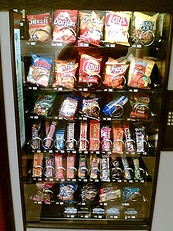
Typical American vending machine circa 2006

Although long overdue and incredibly welcome, the statute as written implies that information is not just necessary but a sufficient means of healthier eating. The information enables the consumer to make decisions with the optimism that knowledge will be the impetus to a healthier lifestyle. The FDA is right that knowledge and information are essential to healthier eating, but assuming that consumers will make informed and healthful dietary choices simply because the options are there is wishful thinking. People know the “right” thing to do or eat a lot of the time, but simply knowing doesn’t translate into doing—intention is also an important element, among other factors like perceived control over behavior and past behavior1.

I’m not criticizing the FDA for not doing more nor am I dismissing the effort put forth by health advocates who worked for these rulings for decades. These mandates represent progress, but they are not sufficient. Labeling and providing calorie totals is hardly enough to curb calorie intake. In a 2009 study that looked at fast-food choices of people** in New York after the introduction of a menu-labeling mandate, researchers found no difference in calories purchased compared to a control group in a city where no menu-labeling mandate existed. This finding was despite the fact that nearly 30% of participants indicated that the calorie labels influenced their decisions2. Awareness doesn’t automatically translate into action.

In fact, sometimes knowing the healthiest option on the menu is enough to make someone choose the least healthy option. Though the decision seems counterintuitive, the behavior exists, and it’s called vicarious goal fulfillment3. Basically, what that means is that people see the salad item on the menu and its calorie total, and it reminds them of the salad they had last week or the one that they promise they’ll eat tomorrow. Feeling justified, people can then order the bacon cheeseburger. It sounds completely counter-intuitive, but the evidence exists.

Let’s take a look at some of the other factors at play when making food decisions in addition to calorie information:

Living with the rule of thumb “everything in moderation:” We all know this mantra. Nutritionists and laypeople alike have endorsed it as an effective means of weight management, but the amount that constitutes moderation is ambiguous, which allows people to interpret it as they see fit. Does moderation mean eating a single cookie or just one sleeve of cookies in a package? For most people, moderation depends on the amount they typically eat. People tend to interpret information in a self-serving way, so those who do eat an entire sleeve of cookies may genuinely believe the amount is moderate, particularly if the alternative is to eat the entire package. In fact, research I collaborated on found that people considered moderation to be slightly more than what they typically ate4. In other words, everyone thought that they ate in moderation, but the definition of moderation varied dramatically by person.

These findings suggest that visible calorie or nutrition information won’t necessarily alter the food people choose when ordering or at a vending machine. Instead, people are more likely to order the same food and then shift their definition of moderation to match what they ate.

Eating with others: An abundance of evidence finds that eating with other people influences everything from what we eat to how much5. Generally, people eat more when they eat with other people unless the others are strangers6. When eating companions are unknown or merely acquaintances, people are much more likely to limit how much they eat so as not to seem sloppy or greedy or any of the other labels that are placed on people who eat “a lot.” Think about a first date you had that involved dinner. What did you order? Did you decide not to order something in particular because of what it might signify to your date? Did you eat more carefully than usual? Maybe you ate less than you usually do. Eating with people you do know may impose a separate set of social pressures to keep up with the group, whether that means ordering dessert for everyone to split or getting a salad with the dressing on the side so you aren’t the odd person out.

Even the gender and appearance of people who are around us in our eating environment can influence the food we choose7. For example, people who order food after a thin person who has ordered a lot of food are more likely to increase the amount they eat, too. The reasoning seems to be that if it’s okay for a thin person to eat that much, then I can, too.  Much of this behavior doesn’t occur at the level of conscious awareness; rather, it’s a quick decision we make automatically without necessarily realizing the aspects that factored into it.

I should note that, although these trends apply across all genders in the United States (where the majority of the research reported here has been conducted), social norms differ for men and women regarding how they should eat. Whereas men may feel pressured to eat more meat to be masculine, women may feel that they must eat less or something “light” so they don’t seem too unfeminine8.

Does this salad make me look feminine?

Does this salad make me look feminine?

All of these factors that you may or may not have been aware of influence your eating patterns,  often above and beyond objective information like calorie labels. In other words, your eating  companions are much more likely to influence your decision on their own or in combination  with the calorie information than the calorie info by itself.

For more information on how eating with others is different from eating alone, keep an eye out  for our upcoming mini-series on social eating.

 Licensing: That feeling of deservingness you have when you worked your butt off earlier in  the day or decided not to have dessert after lunch, for example, that makes you feel entitled to a treat. In simplest terms, licensing is self-justified indulging of (often unhealthy) foods for a variety of reasons, including feeling that you deserve it, availability of the food, intentions to make up for the indulgence later, curiosity about the food, feeling that it’s an exception to what you usually eat, and irresistibility of the food9. See our Justifying Indulgence on Thanksgiving post for more details. In a licensing situation, calorie information is likely to be less important than if someone had not previously decided to indulge.

Another possibility in a licensing situation with visible nutrition information is that the food item that people plan to indulge in may not contain as many calories as people expected, which may lead them to order additional calories at that time or later that day. Maybe you weren’t planning to order fries with your burger, but now that you know the burger only has 300 calories, all bets are off.

~~

These are just a few of the factors at play when people make decisions about what and how much to eat. Most of these influences will occur regardless of whether calorie or nutrition information is available. Furthermore, the very people who may be put off by the calorie amounts likely weren’t eating much of that food anyway. At the other extreme is the group of people who will eat whatever they want, regardless of the calorie amounts. A middle group of consumers exists, however, that we haven’t yet discussed. That group is composed of people who generally try to watch what they eat but can’t be bothered too much by it. And this middle group might be bigger than the other two. Maybe it’s the category you fall into. That group may make food decisions for other groups that wouldn’t change their patterns, like a mother or father deciding for a child. That middle group might also be people who have the intention to eat better, but McDonald’s is the only restaurant in their town. For this middle group, visible calorie and nutrition information may start to speak louder than the other factors. Visible calorie and nutrition information may eventually make its way into people’s working knowledge of nutrition, and knowledge is an initial necessary step to intentional behavior change.

Read more about the statutes here. If you’re interested in many of the other aspects of food decisions, check out Brian Wansink’s work here.


* Only vendors and companies operating at least 20 vending machines/stores are required to follow this new mandate.

** This study focused on low-income people, who may have the additional goal beyond health of getting the most calories for the least amount of money. Unfortunately, these two goals are often at odds with each other.


1 Ajzen. (1991). The theory of planned behavior. Organizational Behavior and Human Decision Processes.

2 Elbel, Kersh, Brescoll, & Dixon. (2009). Calorie labeling and food choices: A first look at the effects on low-income people in New York City. Health Affairs.

3 Wilcox, Vallen, Block, & Fitzsimons. (2009). Vicarious goal fulfillment: When the mere presence of a healthy option leads to an ironically indulgent decision. Journal of Consumer Research.

4 vanDellen, Isherwood, & Delose. (2014). Everything in moderation? Moderation messages are ineffective for healthy eating. Unpublished manuscript.

5,6 Herman, Roth, & Polivy. (2003). Effects of the presence of others on food intake: A normative interpretation. Psychological Bulletin.

7 McFerran, Dahl, Fitzsimons, & Morales. (2010). I’ll have what she’s having: Effects of social influence and body type on the food choice of others. Journal of Consumer Psychology.

8 Bublitz, Peracchio, & Block. (2010). Why did I eat that? Perspectives on food decision making and dietary restraint. Journal of Consumer Psychology.

9 Taylor, Webb, & Sheeran. (2013). ‘I deserve a treat!’: Justifications for indulgence undermine the translation of intentions into action. British Journal of Social Psychology.