Psych in Sum : Debates and body language 101

clinton-trump

talkingpointsmemo.com

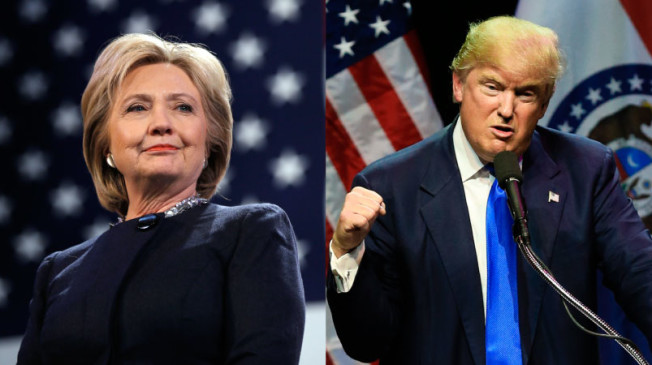
Tonight’s debate is expected to have 100 million viewers—more than any other presidential debate in history. While you’re watching, don’t just listen to what’s said. Watch the body language and delivery style of each candidate and keep the following in mind:

Carli, LaFleur, and Loeber (1995) examined four delivery styles of male or female speakers to determine how persuasive and well-received these styles were by male and female participants.

 Dominant: loud voice, angry tone, points intrusively at other person, maintains almost constant eye contact with other person, stern facial expression

Submissive: soft, pleading voice with verbal hesitations and stumbles, slumped posture, nervous hand gestures¸ averted gaze

Social: voice of moderate volume, relaxed posture with body leaning toward listener, friendly facial expression, moderately high amount of eye contact

Task: rapid speech, upright posture, moderately high eye contact while speaking, few vocal hesitations or stumbles, calm hand gestures

Participants rated these speakers on their competence, level of power (How powerful? Influential? Persuasive?), likeability (how likeable? Friendly? Group-oriented? Trustworthy?), and the extent to which they seemed threatening (How threatening? Condescending? Intimidating?).

Key findings:

  • Dominant style was perceived to be more powerful and influential but NOT more competent and certainly not more likeable. In fact, speakers exhibiting a dominant style, regardless of their gender, were equally disliked by male and female audiences.
  • Male and female speakers using social style were perceived to be the most competent, sociable, friendly and likable.
  • Relatedly, competence was deemed to be equally important for male and female speakers of both audiences. However, likeability was more important for male audiences of female speakers. In other words, female speakers for male audiences must be competent and likeable, whereas male speakers for male audiences only need to be competent. Female audiences showed no difference for male and female speakers.


Does this change how you watch the debate tonight?


Carli, LaFleur, & Loeber. (1995). Nonverbal, behavior, gender, and influence. Journal of Personality and Social Psychology, 68, 1030-1041.


The problem with seeing black men as bad dudes

1_Year_Commemoration_of_the_Murder_of_Michael_Brown,_the_Ferguson_Rebellion,_&_the_Black_Lives_Matter_uprising._(20426285322).jpg

One year anniversary of Michael Brown’s death. Barclays Center, Brooklyn.

Today is September 21, 2016. Keith Scott is the latest black man to be shot and killed by the police. Scott was killed on September 20, 2016, in Charlotte, NC. Terence Crutcher was killed the day before on September 19, 2016, in Tulsa, OK. These men are just the last two to make the news.

Most of these men are unarmed. All of them are black. In fact, black people are three times more likely than white people to be killed by police. For Scott’s and Crutcher’s deaths, police officers justified their decision to shoot by claiming that the individual posed an “imminent deadly threat” (in the case of Scott) or used factors such as the man’s appearance, “That looks like a bad dude, too,” (in the case of Crutcher) to warrant further investigation.

I shouldn’t say claim. I’m sure the officers really believed they were under imminent threat or that Crutcher really was a bad dude. And that’s exactly the problem. Their minds made a split second survival decision to protect themselves and do what they swore to do as a police officer. They made that decision while operating on high alert, unknowingly under the influence of their implicit biases. Those split-second decisions are not the cause, but rather, the symptom of a larger graver issue. Of institutional racism and prejudice that has been with America since before its founding. Many of you reading this already know and accept this. For those of you who don’t, please keep reading.

These split second decisions are killing black people, especially men. If you can stomach it, watch the footage of Philando Castile’s shooting. The officer doesn’t even seem to realize that he’s shot Castille. He’s still standing there at the window in shock, cursing. The actual decision to shoot and the aftermath all seemed to happen so fast. Situations like that are why implicit racial stereotyping and lack of awareness of how to de-bias are so deadly.

We’ve covered implicit bias on SocialPsyQ before when discussing last year’s triple homicide in Chapel Hill, NC, but never in the context of police shootings. As a refresher, implicit biases are automatic (i.e., below the surface of consciousness; not being aware of it) stereotypes or prejudices that people hold, almost always without being aware of them.1 Social psychologists have been studying implicit biases and their effects on behavior and society for years. These biases are deeply ingrained and automatic and yet may still guide our actions and behavior.2 As one researcher said, “the characteristic in question (skin color, age, sexual orientation) operates so quickly…that people have no time to deliberate. It is for this reason that people are often surprised to find that they show implicit bias” (Jolls & Sunstein, 2006, p. 975).

 In a 2011 study, Kahn and Davies found that the more stereotypically black a person looked (e.g., darker skin, broader nose, fuller lips) compared to a less stereotypically black person or white person, the stronger a participant’s implicit bias was in a split-second “shoot/don’t shoot” situation. In other words, participants were more likely to shoot people the “blacker” they looked. And not only were they more likely to shoot them, they were also quicker to make the decision to do so, because of the stronger implicit bias.

In a similar 2006 study, Correll, Urland, and Ito found that participants (98% of whom were not black) playing a video game “shot armed black targets more quickly than armed white targets and decided not to shoot unarmed white targets more quickly than unarmed black targets.” This biased behavior pattern was especially true for participants who had reported a stronger association between violence and black people. The findings of these studies, conducted in lab settings, are a disturbing and sickening parallel to what is literally happening across America.

The shootings are the worst escalation of this implicit bias, but there are many other seemingly milder situations of black people being stopped by police and treated suspiciously or unfairly compared to non-black people. Consider this: compared to a white person stopped for a seatbelt violation, a black person is 176% more likely to have their vehicle searched. The Open Data Policing table below shows that, except for driving while impaired, black people are more likely than white people to have their vehicle searched for any violation. Did I mention this is real data from 2015 stops within the Charlotte-Mecklenburg police’s jurisdiction?

openDatapolicing.png

2015 Charlotte-Mecklenburg Search by Stop-Cause: Black vs. white. Open Data Policing NC.

 And for those of you reading this who still want to resist these stats and claim that officers are shooting white people, too, I say, yes, you’re right. Police officers are shooting and killing white people (and other people of color, for that matter), but these situations, though unfortunate and not excusable, are generally proportionate to the number of white people in the U.S. In other words, the stats on those situations don’t point to white people being singled out, whereas they do for situations of black people being killed. Terence Crutcher was having car trouble when he was approached by police. The threshold for perceiving a white man as “posing a deadly and imminent threat” is substantially higher than perceiving a black man as such, as Kahn and Davies and Correll and colleagues found. Consider Dylann Roof, the white terrorist who killed 9 black people attending bible study in Charleston last summer. Not only was he arrested alive, he was given a bulletproof vest for protection. The hypocritical double standard is nearly laughable if the consequences weren’t so grave.

You might also want to say that the police overall aren’t bad people, they’re trying to do their jobs. Or, there are just a few bad apples. Again, I agree with you. There are probably a few bad apples, and I don’t even necessarily believe those are the ones who have committed these fatal shootings. And I would agree that most police officers aren’t bad people.

Here’s the thing, though: it’s not just about the actions of an individual police officer (although they do need to be held accountable).

Here’s another thing: making a terrible decision under pressure doesn’t make you a bad person. How you respond to and accept responsibility for that decision is another story.

These shootings represent a heightened state of racial tension in this country. They represent implicit racism that is so deeply deeply ingrained in the American psyche and the justice system that many don’t even recognize it as such. White people continue to try and make justifications and rationalize these killings. Why? Stop. It’s over. You’re wrong. Nothing you say changes the fact that 194 black people (in 2016 ALONE) are dead.

What is there to do? Some police departments are considering implicit bias training, but using these trainings as a one size fits all isn’t necessarily a good idea. Instead, Destiny Peery, a law professor at Northwestern University, urges comprehensive multi-pronged approaches like Campaign Zero, which are likely to be more effective in protecting against bias.

It’s a start.

Black lives matter, y’all. Say it and do something about it. I’m talking to you, fellow white people. Are you going to stand by? Educate yourself, regardless of your profession. We all hold implicit biases. We’re still accountable for them. We don’t have to be beholden to them.

_________

If you’re a white person interested in offering your support and solidarity in the wake of the recent shootings, consider looking up your local Standing up for Racial Justice (SURJ) chapter. Or take an anti-racist training, like this one or this one.

1 – Devine (1989). Stereotypes and prejudice: Their automatic and controlled components. Journal of Personality and Social Psychology, 56, 5-18.

2 – Dovidio, Kawakami, & Gaertner (2002). Implicit and explicit prejudice and interracial interaction. Journal of Personality and Social Psychology, 82, 62-68.

3 – Kahn & Davies. (2011). Differentially dangerous? Phenotypic racial stereotypicality increases implicit bias among ingroup and outgroup members. Group Processes & Intergroup Relations, 14, 569-580.

4 – Correll, Urland, & Ito. (2006). Event-related potentials and the decision to shoot: The role of threat perception and cognitive control. Journal of Experimental Social Psychology, 42, 120-128.

5 – Jolls & Sunstein. (2006). The law of implicit bias. Faculty Scholarship Series, Yale Law School. Paper 1824. http://digitalcommons.law.yale.edu/fss_papers/1824/
 

Pernicious personalities: The real threat of narcissistic leadership

trump

Image from The Independent

Personality traits are often somewhat ambiguous. While it’s good to be agreeable, it’s not good to be TOO agreeable. While it’s good to be conscientious, you can be so conscientious that you never eat that piece of cake or splurge on that great meal. But narcissism, having an overinflated view of the self that leads to a sense of entitlement, self-centeredness and superiority, is pretty clear cut. Narcissism is bad for everyone. Being a narcissist comes with no real long term advantages, though short term advantages might be present. In fact, narcissism is such a bad quality that it’s considered part of the “dark triad” of personality traits, which also includes Machiavellianism (being very manipulative) and psychopathy (being callous and lacking empathy).1 Narcissism is not simply having high self-esteem, it is having a grandiose sense of self that is not grounded in reality.

That description might as well be a description of Donald Trump, former reality star and gold enthusiast and current candidate for the Presidency of the United States. When Donald Trump equates his personal success with the sacrifices of a gold star family, or when he talks about how he alone can fix the problems we face (after all, he knows more about ISIS than the generals and he could deal with thorny issues like illegal immigration and health care during his first 100 days in office), he is displaying a classic example of the narcissistic personality. So why do we care?

Well, psychologists have not only studied how narcissism affects individuals, they have also studied how narcissistic leaders affect their constituency. Jerrold Post has suggested that narcissistic leaders have impaired judgment and decision making.2 Because narcissists tend to think they know best, they are less likely to take criticism or advice from others. This is obviously a terrible leadership quality, as narcissistic leaders are more likely to make uninformed decisions, or to go forward with decisions even once contrary information has come to light. Because narcissists have a grandiose view of themselves, they are more likely to be overly optimistic about the efficacy of their beliefs.2 This problem is compounded by the narcissistic tendency to surround oneself with people who agree with the narcissist.3 In the case of the narcissist, the “best people” to surround himself with are the people who agree with him.

But the problems don’t stop there. Betty Glad finds that narcissistic leaders have an easier time rising to power than they do in actually wielding it.3 Narcissists are charismatic, so it is not surprising that narcissism may sometimes help someone get into a position of power.3 But Glad finds that once that power is attained, narcissists run into some serious problems.3 Oftentimes, narcissists have very bad ideas that cannot be enacted when they don’t have power. But once they do, they are less in touch with reality, more likely to display erratic behavior, have difficulty attaining goals and ultimately become paranoid and defensive.3 And when you surround yourself with people who agree with you, this leads to the perfect storm of malignant narcissistic leadership: Someone who thinks too highly of themselves and their own ideas, running essentially unchecked.

There is one more quality of narcissistic leaders that makes them incredibly dangerous: They have superego deficiencies.3 In other words, narcissistic leaders don’t have a very well developed conscience. The very thing that prompts restraint in our actions, that encourages us to think about how our actions affect others, that tells us to put the brakes on when our ideas are out of control…this basic sense of restraint and morality that children develop early on in life is largely missing from narcissistic leaders. So the next time Donald Trump asks why we can’t use nuclear weapons or vows to deport 11 million people, take him seriously. He has demonstrated that he isn’t a man who can really conceive of the consequences of his actions. But we know better. You cannot declare bankruptcy to get out of nuclear war.


  1. Paulhus, D. L., & Williams, K. M. (2002). The dark triad of personality: Narcissism, Machiavellianism, and psychopathy. Journal of research in personality36(6), 556-563.
  1. Post, J.M. (1993). Current concepts of the narcissistic personality: Implications for Political Psychology. Political Psychology, 14(1), 99-121.
  1. Glad, B. (2002). Why tyrants go too far: Malignant narcissism and absolute power. Political Psychology23(1), 1-37.


Feeling 9/11 and its aftermath: America swings right

We don’t typically share first person narratives, but this is an emotional and relevant issue for many Americans. Rather than share something less meaningful to me, I offer my experience of 9/11 and the way I try to make sense of it as a social psychologist.

HAER NY-18-77

Brooklyn Bridge and World Trade Center

Today marks the 15th anniversary of 9/11. The national tragedy was also a local one for me. I grew up in a New Jersey suburb about an hour’s drive from New York City (which, to me, will always be the city). My town was full of commuters who worked in the city. The skyline was visible from our beaches. Half of my classmates were originally from New York. Proximity to the city and, thus, its cultural and financial opportunities was taken as a matter of course, but that didn’t diminish people’s pride of it. After all, it’s New York City. Legendary.

I was 13 on September 11, 2001. In my middle school that day, rumors buzzed, most only half-accurate, about what was happening a mere 22 miles from where we sat: a plane flew into the Empire State Building. No, it was the World Trade Center. What? How could a pilot be that off course? No one understood then that it was terrorism. Why would anyone suspect that? We were sheltered, privileged from that type of national tragedy, like most Americans at that time. The new normal hadn’t yet descended. Teachers had been asked not to say anything to us, and social media didn’t exist. Parents were picking their kids up from school all morning. By lunchtime, our table had three empty seats. Missing were three of my friends whose parents worked in the city (they ended up being okay, fortunately). That’s when we knew something serious had happened. I managed to get some more information out of my guidance counselor at lunch; he liked me. He wouldn’t give me many details, but when I asked, Is it really bad? Are people dead? He said yes.

By the time we walked home from the bus stop, the rumors had evolved: there was still a plane in the air, and no one knew the target. I craned my head up to see if I could spot anything. It was sunny that day, the sky a brilliant blue. Details like these seem dramatic, clichéd, but they underscore the contrast between what seemed impossible and what was actually happening. We knew now that it was terrorism, but the implications of what that truly meant were still uncertain.

That night, my parents and I, my younger sister—at 9, too young to understand but old enough to be scared—were glued to the news. The coverage was gratuitous, repeated footage of the first plane crashing into the North Tower, then the South Tower. Eventually, the collapse. People running, covered in ash, crying. At 13, I had never seen suffering so widespread. I couldn’t stop watching even though it made me feel terrible. My homework for the night, several pages from my Spanish workbook, lay forgotten in my hands, though I clutched the pages tightly.

The next day, I went to school. The township wanted to maintain routine as much as possible. Walking to my bus I smelled the smoke from the Towers that had drifted south. Classmates in the northern part of my town, closest to the city, woke to ash on their lawns.

Those following days, weeks, months blur together. Names were released of neighbors, classmates’ parents, parents’ friends who died in the Towers. Close call stories were told and repeated, like my parent’s friend who was supposed to be on the plane that flew into the South Tower. He had cancelled his business trip at the last minute. From a pier, my best friend’s dad watched one of the Towers come down. My cousin, who lived in Manhattan, volunteered for the bucket brigade at Ground Zero. These stories, these tragedies, they were national, yes. America had been attacked. But they were also local. They felt deeply personal to those of us in the tri-state area; I’m certain that was the case for those living in D.C., too.

The vividness of that day remains with me now, at 28. I still get goosebumps when I think about 9/11. I intentionally avoid movies and TV specials about that day. It upsets me too much. Sometimes, I get angry when I hear about 9/11 or see another movie about it. That day has already done too much damage to the American psyche. Let’s stop profiting from people’s grief.

Now that I’m older, the pain of 9/11 and its aftermath have grown in complexity. I mourn that day and the lives lost, the loss of collective American innocence on a grand scale.

And now I see it through the lens of a social psychologist. Research indicates that shifting toward a more conservative ideology after tragedies is common.1 As our recent post on ideology explained, conservative/right-wing thinking is about endorsing the status quo, resisting change, and prioritizing stability and order. Going to war fits in that category. Taking action to return to the status quo is also a conservative action. This conservative shift happened to many Americans following 9/11. In one study, liberal and conservative participants alike endorsed more conservative attitudes after 9/11 than before.2 People who endorse conservative beliefs likely do so to reduce uncertainty, fear, and anxiety, or as a way to regain stability and order.3 In other words, becoming more conservative, even temporarily, is perceived to be a shield against threat. And that shield felt completely necessary to recover from 9/11. Just take a look at some of the headlines and news stories covering the attack (warning: some of these are graphic).

Unfortunately, this conservative mindset, driven by the desire to be safe, stable, to understand the environment around us, to take care of the threat, went awry too often in the wake of 9/11. In addition to the lives lost, I mourn the context 9/11 set for our country’s political and social agenda. The consequent nationalism bordering on jingoism. The Islamophobia. The justification for Weapons of Mass Destruction, later deemed to be false. The vigor with which we invaded Iraq; and a war that, 14 years later, many veterans who fought are ambivalent about its effectiveness (See Post 9/11 Veterans and their wars). At the time, I, too, supported President Bush’s actions. I believed we did need to go to war. America was hurting. My town was hurting. It was the only way! And I was surrounded by people who felt the same way, adults I trusted and respected. I know there were naysayers then, but I didn’t know them. My priority was to feel safe again.

So on this day, as a progressive anti-racist anti-war social psychologist, I reflect in the best way I know how. I feel pride in the way my hometown came together that fall. The way it honors its lost residents every September. I try to make sense of an event that rocked my foundation, whose subsequent events shaped my understanding of the world and my current identity. I don’t forget, but I also don’t accept the wrong that happened to many in the aftermath of that day. I try to be cognizant of the issues our country has now, as a result of 9/11 or independent of it. And I try to do my part, by working to understand the drivers of human behavior and sharing that knowledge. This blog is one means of that.


1, 3 – Jost , Glaser, Kruglanski, & Sulloway. (2003). Political conservatism as motivated social cognition. Psych Bulletin, 129, 339-375.

2 – Nail & McGregor. (2009). Conservative shift among liberals and conservatives following 9/11/01. Social Justice Research, 22, 231-240.


Political Psych in Sum: Ideology

This fall, we’ll be breaking down various aspects of the American presidential election, ranging from the psychology of why people support particular candidates to the role of group processes in dismissing people who don’t support your beliefs and everything in between. First up, ideology.

Ideology is a motivation-based orientation of being in favor of or against a social system.1 This orientation breaks down into the right-left spectrum we all know so well in today’s political system (the historical origins of determining right wing and left are quite interesting). Whether people endorse right-wing (conservative) or left-wing (liberal) ideas is typically determined by two fundamental dimensions:

  • advocating versus resisting social change (i.e., do you want to keep the social status quo?)
  • accepting versus resisting inequality2

Generally, although with some exceptions,3 knowing where people exist within these dimensions can predict their explicit political attitudes and opinions. And, as recent research shows, these differences also exist in implicit (i.e., automatic, non-conscious) associations (Side note: if you’re unfamiliar with implicit bias, check out the Implicit Association Test). The figure below shows the results of implicit preferences for five values. Higher scores indicate a greater preference for the first value in each pair.


implicit-prefs_jost

Jost, Nosek, & Gosling. (2008). Ideology: Its resurgence in social, personality, and political psychology. Perspectives in Psychological Science


Jost et al. also suggest that people’s threshold for managing risk or uncertainty, as well as their tendency to justify the current political and social system, predicts their place in the right-left spectrum. So, what does this mean?  Consider this: a conservative’s preference for order and fear of uncertainty translate to wanting to maintain the status quo. In contrast, a liberal’s lack of preference for traditional values (or their preference for feminism) translates to endorsing social change and more progressive ideals.

The more you know!


References

1 –  Jost, Nosek, & Gosling. (2008). Ideology: Its resurgence in social, personality, and political psychology. Perspectives in Psychological Science, 3, 126-136.

2,3 – Jost, Glaser, Kruglanski, & Sulloway. (2003). Exceptions that prove the rule—Using a theory of motivated social cognition to account for ideological incongruities and political anomalies: Reply to Greenberg and Jonas (2003). Psych Bulletin, 129, 383-393.


Brock Turner and the Masculine Identity: Perpetuating Rape Culture through Rape Myths

Brock Turner

Image from NY Daily News

On Friday, convicted rapist Brock Turner was released from jail after serving only 3 months of an incredibly lenient 6 month prison sentence for his rape of a woman attending a party. On January 18, 2015, two men witnessed Turner raping an unconscious woman behind a dumpster and held him until police arrived. Aaron Persky, the judge in the Turner case, decided to give Turner a light sentence, considering that a prison sentence would have a “severe impact” on the rapist (arguably the entire point of a prison sentence…). The case was widely regarded as evidence that rape is not taken seriously in legal proceedings, and that men still have difficulty understanding the significance of sexual assault. While Turner must register as a sex offender, he got the equivalent of a legal slap on the wrist for violently assaulting another person. As a woman, I am angry. But as a psychologist, I am unsurprised. Social psychologists have long known how juror perceptions of rape victims, as well as ideas regarding masculine identities, contribute to cases like Turner’s.


Sociologists and psychologists have explored the existence of “rape myths,” or complicated societal beliefs that essentially assert that women are “asking for it.”1 Acceptance of rape myths contributes to rape culture, and casts blame onto the victims of sexual crimes rather than onto the perpetrators. These rape myths are embraced so wholeheartedly that they are often seen in convicted rapists’ speech about their crime.2 Men who have been convicted of rape are more likely to see their crime as ambiguous, such that they believe there is room to interpret their crime as consensual sex.2 A man’s feelings about masculine gender roles also predicts his comfort with sexually coercive behavior, demonstrating that the more that men buy into toxic beliefs about masculinity, the more likely they are to engage in sexual assault.3 While rapists are usually men, rape is still perpetrated by a minority of men, and the men who commit the crime are often seen as social pariahs.4 Indeed, it appears that sex offenders have their own unique qualities. For instance, sex offenders are more likely to lack empathy, or the ability to identify with the experiences and emotions of others, which may contribute to their criminal attitudes.5 This may also explain why some men are comfortable with sexually coercive behavior, while many men are clearly not.


Unfortunately, rape victims must also face a biased court system, as the people involved in legal sentencing are likely swayed by their own perceptions of the victim’s behavior. Those perceptions, unbeknownst to jurors, are often created in part by the very rape myths that contributed to the assault in the first place. There is evidence, for instance, that rape victims that were intoxicated at the time of their assaults are less likely to be seen as credible and are more likely to be seen as deserving of rape by jurors.6 Mock jurors were also more likely to have negative evaluations of rape victims when the victim bought the drinks, as opposed to when the perpetrator bought the drinks, something that contributed to feelings of perpetrator guilt.7 This effect is similar to the finding that victims who willingly ingest substances are seen as “more to blame” than victims who ingested substances unwillingly.8 Interestingly enough, it is often a tactic for the rapist to use their own level of intoxication to excuse their actions, suggesting that they would have behaved differently if they had been sober. Research does support this to some degree, finding that the amount of alcohol ingested is positively related to the seriousness of the assault committed.9 Ironically, research also suggests that some men, particularly men who endorse rape myths, are more likely to buy women alcohol as a way of procuring sexual access through intoxication.10


Luckily, there are few people who commit these heinous acts, and, to some degree, they can be recognized by their personality traits. The “macho personality” is composed of characteristics like seeing violence as masculine and dangerous situations as thrilling. Men who possess these specific macho traits are more likely to behave violently and gravitate towards violence.11 It’s important to remember that no amount of alcohol can force someone to commit a violent act, even if Brock Turner’s friends and family think differently. It’s also important to consider the bigger picture: how ideas about masculinity and biased perceptions of victims contribute to both the formation of rapists and the perpetuation of rape culture. Rather than focusing on drinking on college campuses, we need to work to dispel rape myths that equate intoxication with sexual invitation.


  1. Payne, D.L., Lonsway, K.A., & Fitzgerald, L.F. (1999). Rape myth acceptance: Exploration of its structure and its measurement using the Illinois Rape Myth Acceptance Scale. Journal of Research in Personality, 33, 27-68.


  1. Lea, S. & Auburn, T. (2002). Feminism & Psychology: “The social construction of rape in the talk of a convicted rapist.” Women and Language, 25(2), 58.


  1. Truman, D.M., Tokar, D.M., & Fischer, A.R. (1996). Dimensions of masculinity: Relations to date rape supportive attitudes and sexual aggression in dating situations. Journal of Counseling and Development, 74(6), 555.


  1. Lee, P.C. (2003). Reason, rape and angst in behavioral studies. Science, 301(5631), 313.


  1. Marshall, W.L., Hudson, S.M., Jones, R., & Fernandez, Y.M. (1995). Empathy in sex offenders. Clinical Psychology Review, 15(2), 99-113.


  1. Wenger, A.A. & Bornstein, B.H. (2006). The Effects of victim’s substance use and relationship closeness on mock jurors’ judgments in an acquaintance rape case. Sex Roles, 54(7-8), 547-555.


  1. Lynch, K.R., Wasarhaley, N.E., Golding, J.M., & Simcic, T. (2013). Who bought the drinks? Juror Perceptions of intoxication in a rape trial. Journal of Interpersonal Violence, 28(16), 3205-3222.


  1. Stewert, D.N. & Jacquin, K.M. (2010). Juror perceptions in a rape trial: Examining the complainant’s ingestion of chemical substances prior to sexual assault. Journal of Aggression, Maltreatmen,t & Trauma, 19(8), 853-874.


  1. Abbey, A., Clinton-Sherrod, A.M., McAusian, P., Zawacki, T., & Buck, P.O. (2003). The relationships between the quantity of alcohol consumed and the severity of sexual assaults committed by college men. Journal of Interpersonal Violence, 18(7), 813-833.


  1. Sanchez-Romero, M. (2010). Alcohol use as a strategy for obtaining nonconsensual sexual relations: Incidence in Spanish university students and relation to rape myths acceptance. The Spanish Journal of Psychology, 13(2), 864-874.


  1. Zaitchik, MC. & Mosher, D.L. (1993). Criminal justice implications of the Macho personality constellation. Criminal Justice and Behavior, 20(3), 227-239.


Belief superiority, guns, and faulty data: A recipe for frustration

I’ve been seeing a lot of memes, conversations, and sarcastic comments online lately about gun control, especially with Obama’s latest executive order. The content is usually somewhere along the lines of “We should prohibit guns like we prohibit drugs, because no one does drugs anymore, right?” Which is supposed to be funny and point out the blatant “idiocy” of how making something illegal doesn’t stop people from using it. Get it?

Here’s where I get frustrated. Because do I really have to go into the difference between illegal and regulated and point out that no one is making it illegal for Americans to arm themselves? Do I have to state the fact that expanding regulations would ensure that people with violent backgrounds can’t purchase a gun at a gun show without a proper background check? Or that closing loopholes and supporting inter-state communication about gun sales and background checks would make it more difficult for someone to buy a gun in one state from a pawn shop and use it to commit a shooting in another state?

Never mind the fact that the argument not to do something because some people will try to do it anyway is a weak one.

Some pro-gun/anti-regulation advocates have cited a study recently released by the Crime Prevention Research Center (CPRC) as evidence that expanding background checks to include private transfers of guns won’t prevent mass shootings. The study claims that the frequency of mass shootings actually increases in states with background checks on private transfers, thus negating the need for expanded gun regulations as an effective means of protection.

In addition to this study’s fundamental error of conflating correlation with causation and ignoring missing data, it should be noted that the founder of the CPRC is gun researcher Dr. John Lott. His research, including additional work conducted by the CPRC, has come under scrutiny before and has largely been discredited. It’s not surprising that this study was not published in an academic peer-reviewed journal. Although the peer review process admittedly has its own glitches, it’s still the gold standard for ensuring that published studies are rigorous, impactful, and contain plausible conclusions. Hence, my reluctance to give credence to this particular study that many in the anti-regulation gun crowd are using as a rallying cry.

What’s happening with the gun debate and other polemical issues is something beyond people clinging to discredited data or researchers like Lott drawing conclusions that favor their beliefs. A recent NYTimes editorial talks about the extreme perspective on gun control taken by many of the current Republican presidential candidates, labeling them the “hear-nothing gun crowd,” aka the anti-regulation folks, who essentially refuse to engage in meaningful debate or even conversation about gun control. In fact, Ted Cruz preempted Obama’s public announcement about the gun regulation executive order by publicly condemning it before the specifics had been released; other Republican candidates responded in suit.

Aside from an obvious display of highly partisan politics (business as usual on the Hill), research on belief superiority1 may explain the playing field here. Belief superiority describes people who have more strongly held (“extreme”) beliefs who see these beliefs as superior to others’. This tendency seems to hold true regardless of direction (i.e., far-right or far-left viewpoints), although the issues may vary for self-identified liberals and conservatives. In a 2013 study of more than 500 participants published in Psych Science, those who identified as very conservative or very liberal on a particular issue were significantly more likely to agree that their beliefs are superior. Moderates or “neutral” participants were more open-minded and willing to consider beliefs that didn’t align perfectly with their own.

From Feeling superior is a bipartisan issue: Extremity (not direction) of political views predicts perceived belief superiority. Psychological Science, 2013

These findings suggest that all of us, regardless of political ideology, are a bit biased at times. Combined with misinterpreted data, such as Lott’s skewed conclusions, rigid beliefs can produce counterproductive and immoveable perspectives.

So, take this for what you will: is the new executive gun order an attack on the Second Amendment, regardless of what the empirical evidence suggests? Are anti-regulation advocates just using it as another opportunity to espouse the same viewpoints, essentially hearing nothing? Don’t take the rhetoric and snide remarks about Obama’s “pointless” new gun regulations at face value. Consider the way belief superiority works and recognize that the more strongly held beliefs about guns people have, the less likely they may be open to alternative viewpoints. And also recognize this: guns aren’t being made illegal. These new regulations are likely to have a positive impact. Isn’t it worth trying?


1 – Toner, K., Leary, M.R., Asher, M.W., & Jongman-Sereno, K.P. (2013). Feeling superior is a bipartisan issue: Extremity (not direction) of political views predicts perceived belief superiority. Psychological Science, 0956797613494848.


Psy Applied: Self-Control Strategies for Life (Part 3)

As the holiday season winds down, and marketers make their last cash grab of 2015, it’s time to talk about a self-control dilemma that is near and dear to my heart: impulse shopping. Black Friday is over, Cyber Monday has come and gone, but for some reason, there is no term for the deep discounts on holiday overstock that are currently flooding my email inbox. Perhaps that’s part of the point. By keeping marketing messages subtle, retailers can actually activate thoughts without your conscious awareness. You probably just got a bunch of crap you don’t need yesterday, so why are you thinking of buying more stuff today just because it’s 25% off? Knowing is half the battle, so in this installment of Psy Applied, I will be shedding some light onto the ways that marketers influence your purchasing goals.

  1. Priming- When someone is primed, it means that they have encountered a message that has affected their thoughts and behavior outside of conscious awareness.1 This is literally the entire point behind a lot of brand messaging. Much of the efficacy of these messages depends on you staying the dark. If you suddenly have a craving for Coca-Cola, you may not act on it if you realize that you’ve just been exposed to a Coca-Cola product placement on a television show. However, if you don’t notice the product placement, you are significantly more likely to choose the brand that you have just been exposed to. Research on priming has revealed some potent effects. In research about incidental brand exposure, researchers altered several pictures by placing a Dasani water bottle in the scene.2 The participants who didn’t notice the Dasani water in the pictures were significantly more likely to choose Dasani bottled water over another brand, but only after they had been exposed to the brand 12 times.2 While this may seem excessive, it actually mimics real life in many ways. We are bombarded with thousands of incidental brand messages each day, many of which involve repeat exposure to popular brands.3 Marketers use the fact that you can’t attend to all of these messages to their advantage, and they hope to bug you enough to be on your brain, but not enough so that you really know why. Notice the prime, fight the power.
  1. Persuasive appeals- Social psychologist Robert Cialdini has spent much of his career trying to uncover the strategies that people use to persuade others to behave in certain desired ways. Specifically, Cialdini uncovered 6 persuasion tactics that marketers use to make you buy in.4 The first strategy, reciprocation, depends on you feeling indebted for getting something for free, whether it’s a sample at the grocery store, or a five-dollar bill included with a marketing survey you got in the mail. Essentially, they make you feel like you owe them. The second strategy, and my personal favorite, is social proof. This is when marketers convince you that everyone else is doing it. In one study about hotel water conservation, guests were significantly more likely to reuse their towels when the appeal to do so included information that most of the other guests participated in the reuse program.5 This is basically marketing peer pressure. The third strategy, commitment, activates our desire to be consistent in our thoughts and behavior, and is often used for things like weight loss programs. If you tell everyone you are doing it, you have a desire to follow through so you don’t look bad. No one wants to be a flip-flopper. Strategy four, liking, is a common approach used by salespeople. We buy things from people we like, so marketers try harness this in several ways. They may hire a popular celebrity, a person that’s incredibly attractive, or they may try to target marketing towards specific people, increasing liking through the similarity between you and the spokesperson. The fifth strategy, authority, involves convincing people that you have expert knowledge. Marketers may use doctors to sell weight loss drugs or chefs to sell cookware. Their goal is to convince you that people in the know prefer their products. Finally, the sixth strategy, scarcity, tries to convince people that their opportunity to buy is limited. This may be through special edition or seasonal products, or through limited release collector’s editions, for example. The name of the game is to make you feel like you will miss out if you don’t act now. These 6 strategies are incredibly effective, and they’ve been selling you stuff since you were born.

It’s not surprising that advertising appeals affect the things that we purchase. Why else would companies dump billions of dollars into marketing? We often like to think that we are above being influenced, but Cialdini has demonstrated just how easy it is to persuade someone, while others have shed light onto how this may affect your behavior completely outside of conscious awareness. As we enter 2016 with our holiday bills burning a hole in our mailboxes, remember this: A savvy consumer is a suspicious consumer.


  1. Chartrand, T. L., & Bargh, J. A. (1996). Automatic activation of impression formation and memorization goals: Nonconscious goal priming reproduces effects of explicit task instructions. Journal of Personality and Social Psychology, 71(3), 464.
  1. Ferraro, R., Bettman, J. R., & Chartrand, T. L. (2009). The power of strangers: The effect of incidental consumer brand encounters on brand choice. Journal of Consumer Research, 35(5), 729-741.
  1. Fitzsimons, G. M., Chartrand, T. L., & Fitzsimons, G. J. (2008). Automatic effects of brand exposure on motivated behavior: how apple makes you “think different”. Journal of Consumer Research, 35(1), 21-35.
  1. Cialdini, R. B. (1987). Influence. A. Michel.
  1. Goldstein, N. J., Cialdini, R. B., & Griskevicius, V. (2008). A room with a viewpoint: Using social norms to motivate environmental conservation in hotels. Journal of consumer Research, 35(3), 472-482.


Psy Applied: Self-Control Strategies for Life (Part 2)

1290625603057_4626969

Image from someecards.com

It’s the 25th and Thanksgiving is tomorrow. From experience, I know the gateway holiday, as I lovingly call it, can sink a diet faster than a German U-Boat. You think you’re being healthy, eating candied yams and green beans covered in cream soup, but really you might as well open a pint of Ben and Jerry’s because you’re OD’ing on sugar just the same. Now, I’m not here to lessen your enjoyment of the holiday. I, too, will be stuffing my face with stuffing tomorrow. But there are some tips and tricks we can glean from social psych research to help us survive the holidays without elastic waistbands. Today, we are going to discuss the wisdom, and the wonder, of counteractive self-control.

Counteractive self-control is a self-control strategy where people use a temptation to remind them of the goal they are supposed to be pursuing, thus counteracting the temptation and causing them to act in a goal-consistent way.1 If you ever posted a picture of yourself looking fire in a bikini on the refrigerator to remind you of your diet when you want to eat, congratulations, because you are already a counteractive self-control master. There are two kinds of counteractive control: explicit and implicit. Explicit counteractive self-control comes online purposefully, when people feel the need to bolster the value of their goals in order to overcome the relative allure of the temptation. Implicit counteractive self-control, however, happens without conscious intent. People who are skilled self-regulators tend to automatically increase the value of their goals when they are confronted with temptations to ensure that they are not distracted from their pursuits.2,3 Good for those people. The rest of us want pumpkin pie.

So, it’s lucky for us that we too can engage in counteractive self-control, albeit with more deliberate intention. The first step to counteractive control is to recognize that a self-control dilemma exists in the first place.4 A self-control dilemma is a situation in which you want to practice self-control in order to work towards a goal, but you are tempted to act in a goal-inconsistent way by some short-term desire that can be satisfied now.5 Once you realize that your goal commitment is threatened, you must take action by engaging in counteractive self-control in one of three ways: 1) Bolster the value of the goal, 2) Offer yourself a delayed reward, or, 3) Self-impose a penalty.6 You can also precommit to indulge later if your problem is that you don’t enjoy yourself enough on the holidays, but then why are you reading this post you paragon of regulatory success?7

1) Bolster your goal- This is the idea behind implicit counteractive self-control. People automatically enhance the value of their goal when they are tempted to abandon it.8 However, you can also explicitly bolster the value of your goal. Goals that are important and cognitively accessible are more likely to appear valuable, and to trigger cognitive biasing toward your goal.9 Mental contrasting procedures can help people to elaborate on their goals, increasing commitment and specificity, thus increasing the accessibility.10 However, goals must be important and temptations must be strong in order for counteractive self-control to come online at all, so don’t expect this to work for that half-assed dieting goal you formed on Monday and barely considered before being confronted with all of your favorite foods.11

2) Offer yourself a delayed reward- This is a popular strategy with moms and cigarette smokers: Do something now and you can have something later. In order to capitalize on the efficacy of the reward, people tend to offer themselves bigger rewards as self-control dilemmas become more difficult for them.12 So, for a self-control dilemma that is relatively easy to overcome, you may reward yourself with the new Adele album, while a relatively difficult dilemma may prompt a bigger, more desirable reward, like a vacation. By delaying the reward, you make the reward contingent on some goal-relevant action you will perform.12 In turn, this makes the goal-relevant action important, because it will lead to the coveted reward.12

3) Self-imposing a penalty- This is an incredibly effective, but less popular, strategy. Instead of rewarding yourself for good behavior, people who use penalties punish themselves for bad behavior. In cases of self-imposed penalties, people may precommit to losing certain privileges, or to having to perform specific unpleasant actions, if they fail to accomplish an important goal. For instance, you may decide that failing to stick to your monthly budget should be penalized with a monetary donation to a charity for a cause you hate. The desire to avoid the unpleasant penalty increases the value of the goal-relevant action, as this is the path to avoidance.13

While implicit counteractive self-control seems like a cruel cosmic joke, bestowed on those of us who are already killing it, explicit self-control can work for everyone, no matter how good a self-regulator they are. With all of the tempting foods we encounter as the year winds down, we must remind ourselves of our goals now, instead of waiting to commit to act on them until next year. But, it is also important to avoid overcontrol. The holidays are a time to enjoy ourselves, and each other, so make sure to balance your diet and your joy this season! Happy Turkey Day y’all!

  1. Trope, Y., & Fishbach, A. (2000). Counteractive self-control in overcoming temptation. Journal of personality and social psychology, 79(4), 493.
  2. Fishbach, Friedman, & Kruglanski, 2003,
  3. Fishbach, A., & Shah, J. Y. (2006). Self-control in action: implicit dispositions toward goals and away from temptations. Journal of personality and social psychology, 90(5), 820.
  4. Myrseth, K. O. R., & Fishbach, A. (2009). Self-control a function of knowing when and how to exercise restraint. Current Directions in Psychological Science, 18(4), 247-252.
  5. Kroese, F. M., Evers, C., & De Ridder, D. T. (2009). How chocolate keeps you slim. The effect of food temptations on weight watching goal importance, intentions, and eating behavior. Appetite, 53(3), 430-433.
  6. Fishbach, A., & Trope, Y. (2005). The substitutability of external control and self-control. Journal of Experimental Social Psychology, 41(3), 256-270.
  7. Kivetz, R., & Simonson, I. (2002). Self-control for the righteous: Toward a theory of precommitment to indulgence. Journal of Consumer Research, 29(2), 199-217.
  8. Fishbach, A., Zhang, Y., & Trope, Y. (2010). Counteractive evaluation: Asymmetric shifts in the implicit value of conflicting motivations. Journal of Experimental Social Psychology, 46(1), 29-38.
  9. Fishbach, A., & Trope, Y. (2007). Implicit and explicit mechanisms of counteractive self-control. Handbook of motivation science, 281-294.
  10. Duckworth, A. L., Grant, H., Loew, B., Oettingen, G., & Gollwitzer, P. M. (2011). Self‐regulation strategies improve self‐discipline in adolescents: Benefits of mental contrasting and implementation intentions. Educational Psychology, 31(1), 17-26.
  11. Fishbach, A., & Converse, B. A. (2010). Walking the line between goals and temptations: Asymmetric effects of counteractive control. Self control in society, mind, and brain, 389-407.
  12. Trope, Y., & Fishbach, A. (2005). Going Beyond the Motivation Given: Self-Control and Situational Control 0ver Behavior. Psychology, 7(3), 417-458.
  13. Ariely, D., & Wertenbroch, K. (2002). Procrastination, deadlines, and performance: Self-control by precommitment. Psychological science, 13(3), 219-224.


Social Psych Snapshot: Week of 10/19


Hannah graduated with a degree in Psychology from Reed College, and worked in educational research and meta-analysis as a lab manager at Duke University before entering the Social Psychology PhD program in 2014. Her research focuses on social psychological processes at work in educational contexts.